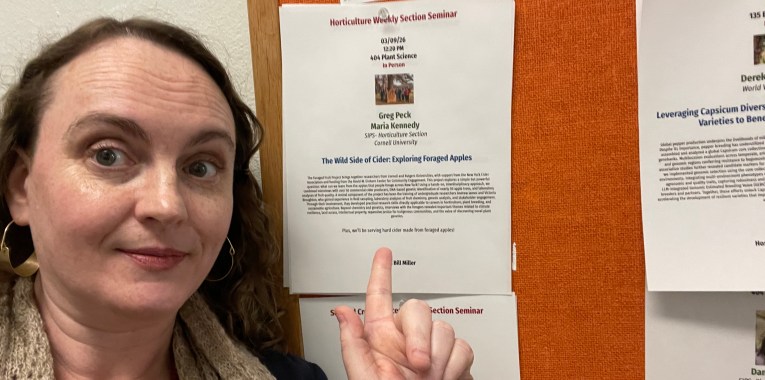
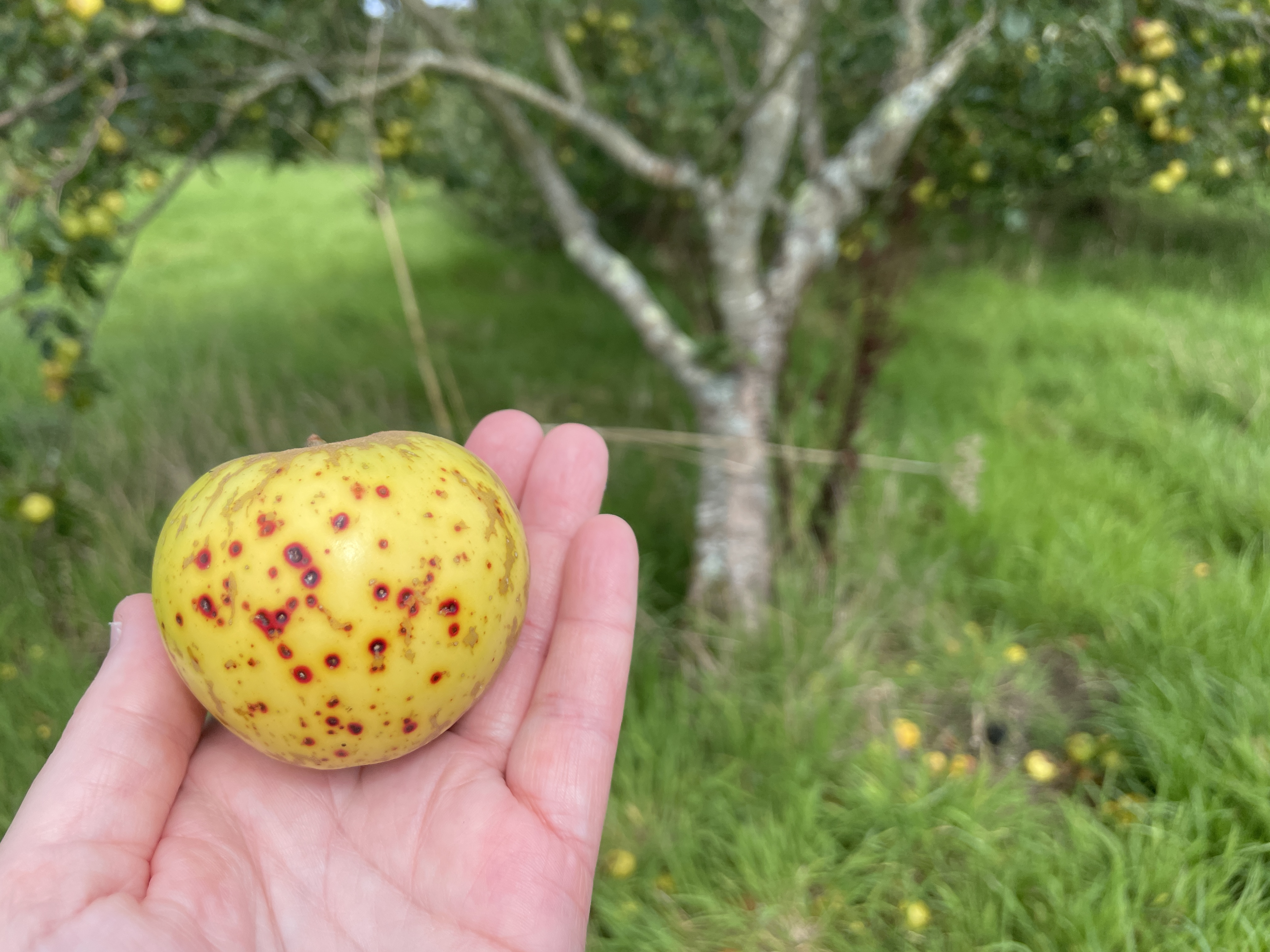
Our Foraged Fruit Project team gave a talk for the Horticulture Seminar at the Cornell University School of Integrative Plant Sciences on March 9, 2026! It was a great opportunity for us to present as a group one final time before our undergraduate students Andrew James and Victoria Broughton graduate this spring. The Link to the talk can be found here: https://youtu.be/w4DYUM1O-XI?si=xVSPyZUoIRWw1c9J
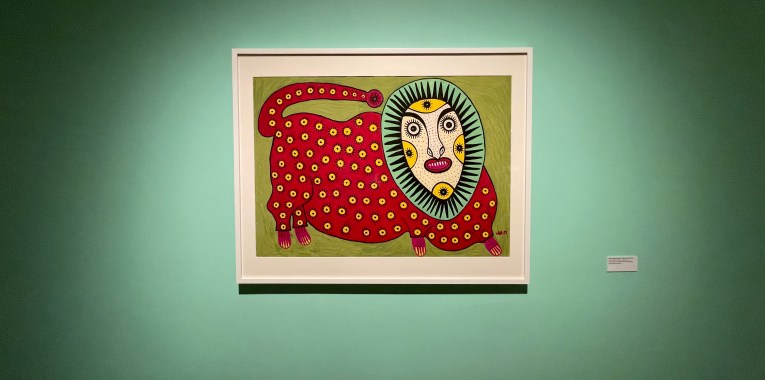
Produced by The Ukrainian Museum by Peter Doroshenko (review)
Published in the Journal of American Folklore
Earlier this year, I published a review in the Journal of American Folklore of a wonderful exhibit which passed through New York City at the Ukrainian Museum. Please Enjoy this review available on Muse here: https://muse.jhu.edu/pub/25/article/963974
Kennedy, Maria. Review of Exhibit Review: Maria Prymachenko: Glory to Ukraine. Produced by The Ukrainian Museum, by Peter Doroshenko. Journal of American Folklore 138, no. 548 (2025): 245-246. https://muse.jhu.edu/article/963974
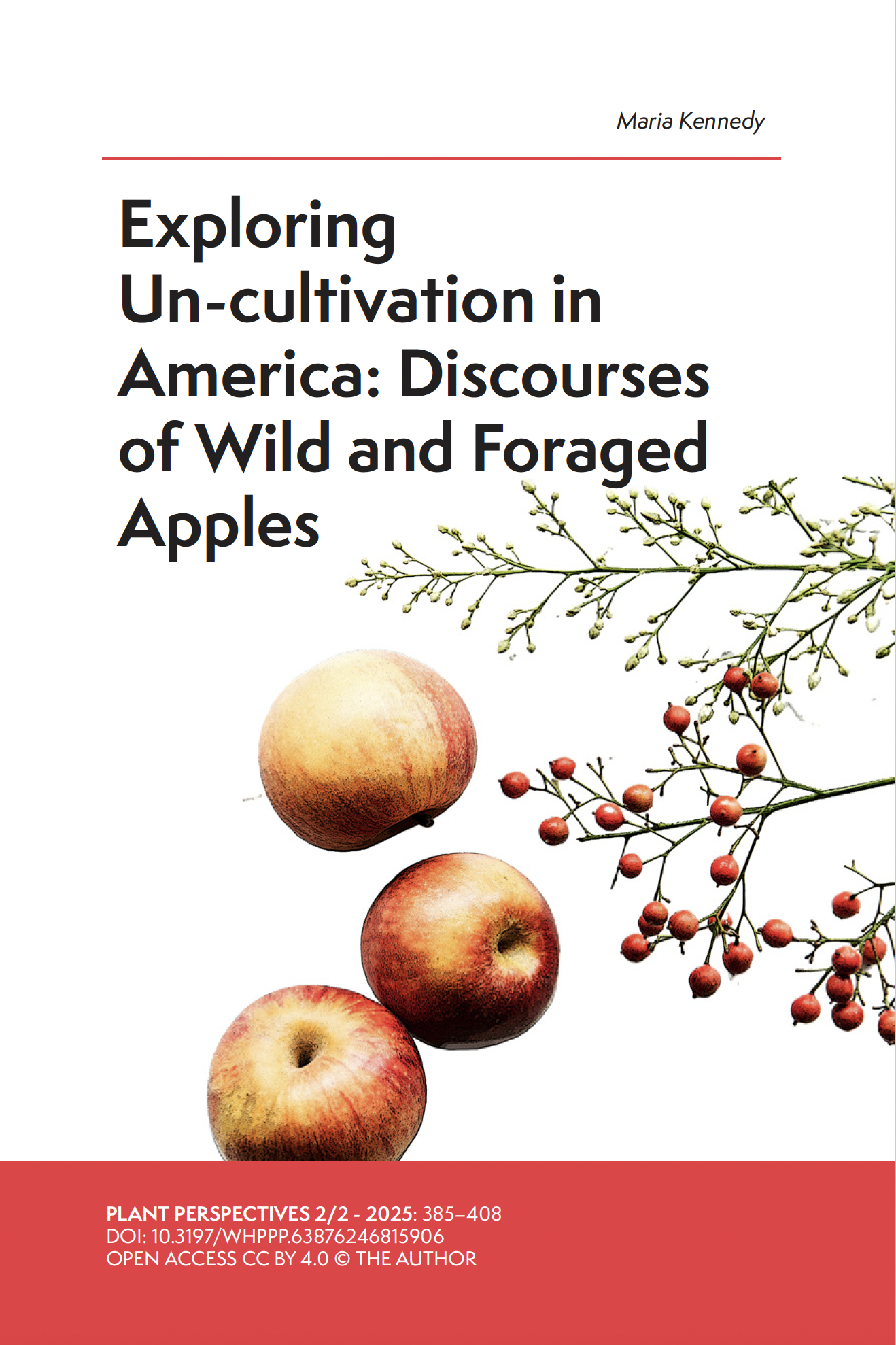
“Exploring Un-cultivation in America: Discourses of Wild and Foraged Apples“
I’m excited to share a new publication in the journal Plant Perspectives! This publication is a special issue: “Tree cultures and the arboreal humanities” edited by Caroline Cornish and Christina Hourigan. It was the end-result of a convening of panels at the Royal Geographical Society in 2022 and at the Linnean Society in 2023. It was such a pleasure to be a part of these panels and learn from my fellow panelists and writers about their research into tree cultures. This article is part of the Foraged Fruit Project with Dr. Gregory Peck and his team at Cornell. The journal articles are available here: https://www.whp-journals.co.uk/PP/issue/view/166
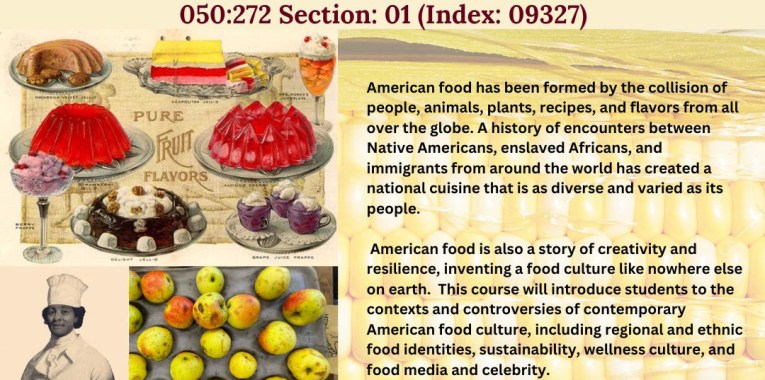
I’m excited to be teaching a new course this semester in the Department of American Studies at Rutgers University New Brunswick: “American Food.”
This course was originally developed by my colleague Dr. Carla Cevasco, but I have revamped it to reflect my areas of expertise and interest. So naturally, orchard and cider content is present. With the help of some of my friends and colleagues, I also added a lot of amazing content and some wonderful guest speakers for this spring semester. This really is a reflection of the breadth of depth of my network in the food and agriculture sectors… and it barely scratches the surface.
I’m also excited to use this opportunity to read some works I haven’t read, and to learn about some things I’m less knowledgeable about. Sometimes teaching a class is the perfect way to set goals for yourself to learn! For example… the Farm Bill. I’ve never read it, and can’t claim to understand it. But with my students, I’m going to dive in.
Since solicitations of ideas from my food and ag network were so key to developing my version of this course, I’d like to share the final syllabus with you here. This google document has comments enabled. If you’d like to add any thoughts, suggest any other readings or speakers, please feel free to do so. While my plans for this semester are set, the future always beckons. Wish me and my students luck this semester!
I was recently asked by a colleague to offer some advice to a potential grad student seeking programs where they could study at the intersection of plant science and social science. The student in question was specifically interested in an academic teaching/research career. I would have additional/different kinds of advice for someone interested in careers beyond the academy. My response seemed worth archiving and sharing. I’ve revised it a bit to offer some additional advice I’ve given to other students over the years. My links are a bit random and definitely incomplete – what I could think of at the moment. Suggestions, corrections, and comments are welcome.
Hello Student!
One of the things I’d encourage you to think about is – especially if you want to teach in higher ed – what discipline do you want to be your primary home? That question will determine so much of your professional life. Innovative trans-disciplinary programs that truly integrate social science and plant science disciplinary orientations are rare, very interesting, and worth looking at. However, you must ask yourself a basic question, do you want your core scholarly identity to be in the social sciences or the plant sciences? Generally you have to pick one, as even trans-disciplinary programs and departments will be more of a collaboration between scholars in those disciplines, rather than a true melding of them. It is very hard to do both, unless you do them sequentially. In general, I have known some people who become qualified in a science discipline and then pursued a social science later: MDs who become anthropologists, for example. I think it would be much harder to do it the other way around. Grounding yourself in a chosen discipline does, however, open the way towards collaborating effectively with others around shared topics of interest.
So a very important question to ask at this stage, is: how much are you married to a specific discipline, methodology, or topic? Knowing what you are into may be hard to know as an undergrad, but the more you can dwell on that question, the more insight you will have as to a good fit for graduate school, and even more, in the long haul of your career.
If you want to work at the boundary of social science / plant sciences, from a primarily social science position, there are a number of social science disciplines and programs that could work, but the boundaries, opportunities, and limitations are more or less distinct according to discipline, and this can affect your ability to find academic employment later in your career. For example:
Anthropology tends to be very insular but also widely applicable. In other words, you could get an anthro degree and be accepted in a wide range of social science or humanities departments, because it is the core ethnographic method discipline. But you will never be employed in an anthro department if you are not specifically trained as an anthropologist. Though I am very familiar with anthro scholarship, I do not think I would ever be employed in an anthro department, as I did not study or obtain a degree in an anthro department. My colleagues who aimed to be employed in anthro departments all got anthro PhDs or joint PhDs with anthro. Anthropology is often highly oriented to its own methodology, especially in its teaching functions, whereas other departments or disciplines may be more oriented towards topic and less towards methodology. Anthropology has long had a focus on human relationships to natural resources. I would look for programs that have specialties in Ethnobotony, Environmental Anthropology or Anthropology of Food. There are a bunch. Easy to find via search. Here are some links:
Geography is a very open discipline, at least in the social/cultural/human branches. I mix with cultural geographers a lot, attend their conferences, and have fruitful collaborations with them. They are very welcoming to many disciplines, as long as the orientation is to study of place or environment. They are kind of in the inverse of anthro: more oriented to topic, more flexible on methodology.
Sociology is especially open to applied and policy work but usually requires quantitative training. There is an area of this discipline known as rural sociology that often deals with agricultural issues. I find it fascinating, but has waned in intellectual notice in recent years. It tends to still live at land grant universities and be more oriented to economic or demographic questions.
Interdisciplinary or niche departments (like American Studies, Folklore and Ethnomusicology, Gender Studies, Food Studies, Science and Technology Studies etc…) tend to be a total wild cards. It really depends who your advisor is and what their specific disciplinary orientation is. Getting a PhD in such a department means committing to a career of being entrepreneurial, self-starting, and adaptable. You will always need to make the case for how you fit into a more traditional discipline. But you are also more empowered to adapt to varied opportunities than people with more traditional or rigid disciplinary homes. Your minor or secondary area of study will be very important if you take this route, so that you can strategize your appeal to a variety of teaching or research homes. This has been my personal experience. Here is an initiative from my home discipline, Folklore and Ethnomusicology:
Landscape Architecture is professional field oriented to training and licensing practitioners. If you want to work outside of an academic space in a field dedicated to making tangible, practical change in human behavior in relationship to plants, and you are interested in art, design, or engineering, this may be a field to explore.



 Cider With Maria