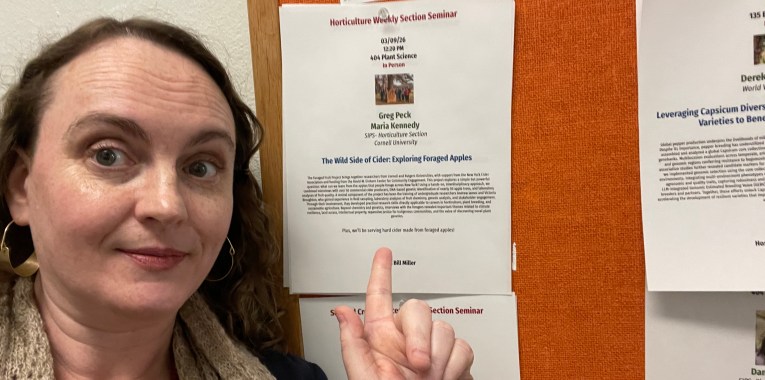
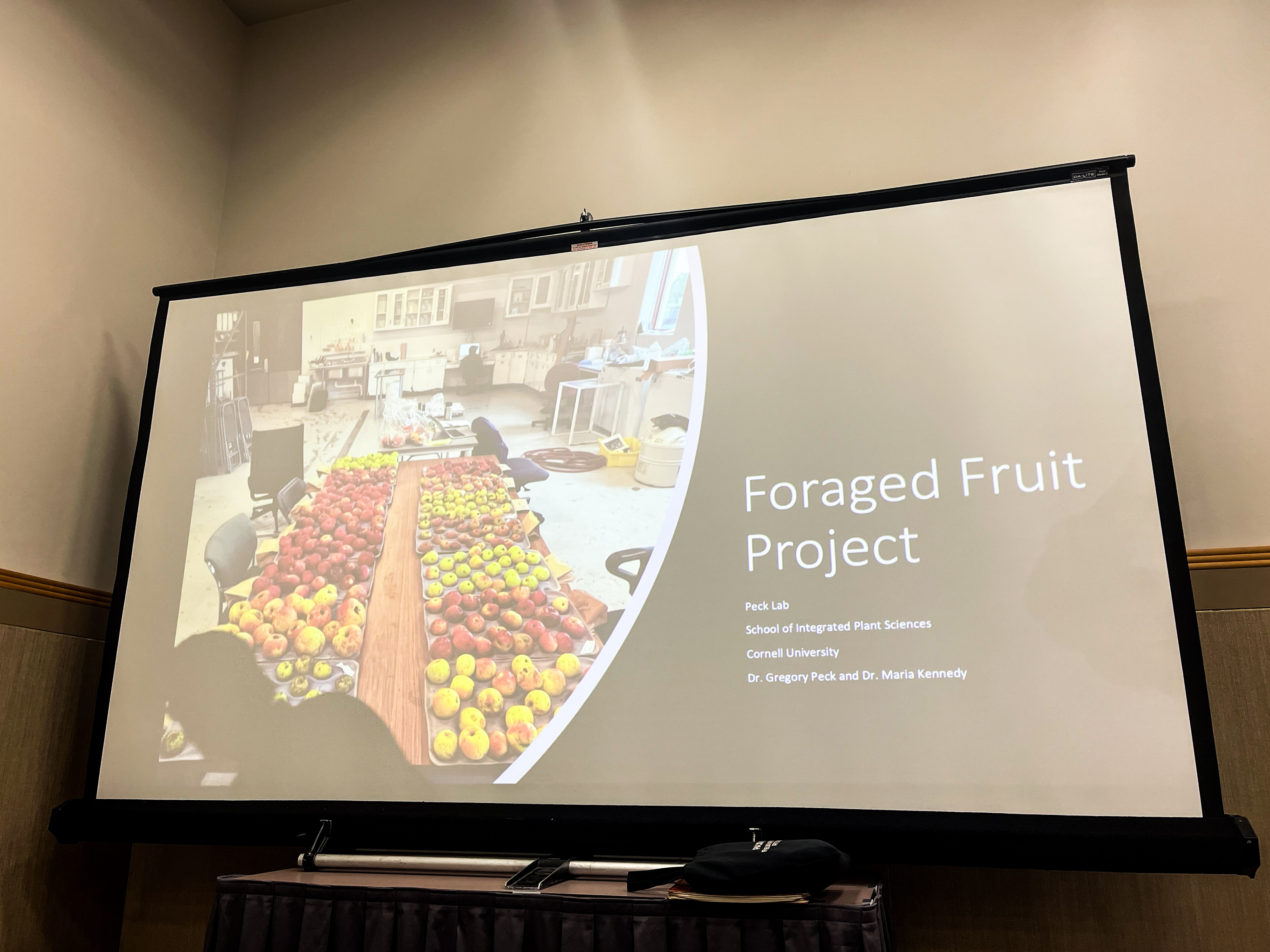
Our Foraged Fruit Project team gave a talk for the Horticulture Seminar at the Cornell University School of Integrative Plant Sciences on March 9, 2026! It was a great opportunity for us to present as a group one final time before our undergraduate students Andrew James and Victoria Broughton graduate this spring. The Link to the talk can be found here: https://youtu.be/w4DYUM1O-XI?si=xVSPyZUoIRWw1c9J
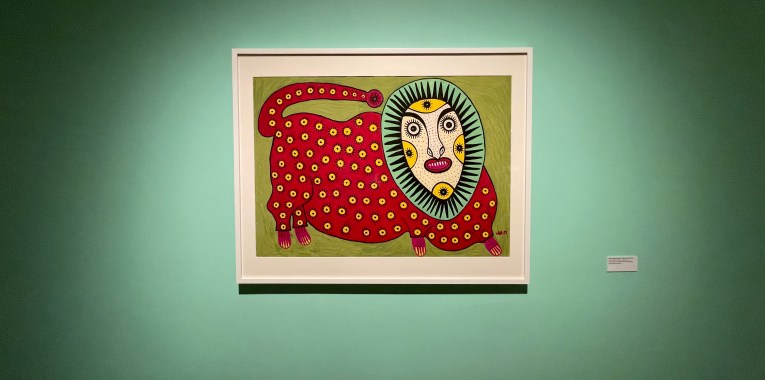
Produced by The Ukrainian Museum by Peter Doroshenko (review)
Published in the Journal of American Folklore
Earlier this year, I published a review in the Journal of American Folklore of a wonderful exhibit which passed through New York City at the Ukrainian Museum. Please Enjoy this review available on Muse here: https://muse.jhu.edu/pub/25/article/963974
Kennedy, Maria. Review of Exhibit Review: Maria Prymachenko: Glory to Ukraine. Produced by The Ukrainian Museum, by Peter Doroshenko. Journal of American Folklore 138, no. 548 (2025): 245-246. https://muse.jhu.edu/article/963974
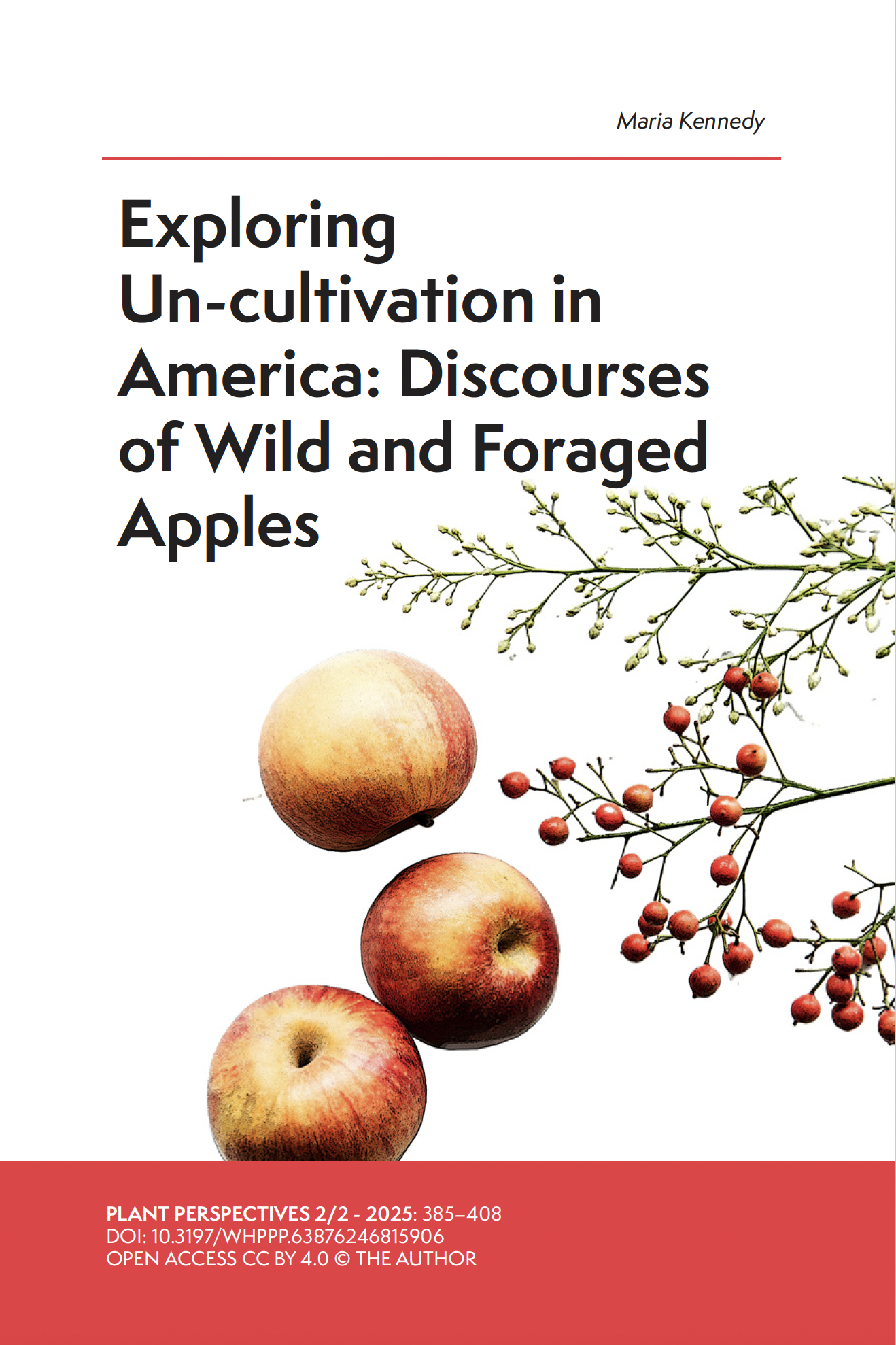
“Exploring Un-cultivation in America: Discourses of Wild and Foraged Apples“
I’m excited to share a new publication in the journal Plant Perspectives! This publication is a special issue: “Tree cultures and the arboreal humanities” edited by Caroline Cornish and Christina Hourigan. It was the end-result of a convening of panels at the Royal Geographical Society in 2022 and at the Linnean Society in 2023. It was such a pleasure to be a part of these panels and learn from my fellow panelists and writers about their research into tree cultures. This article is part of the Foraged Fruit Project with Dr. Gregory Peck and his team at Cornell. The journal articles are available here: https://www.whp-journals.co.uk/PP/issue/view/166
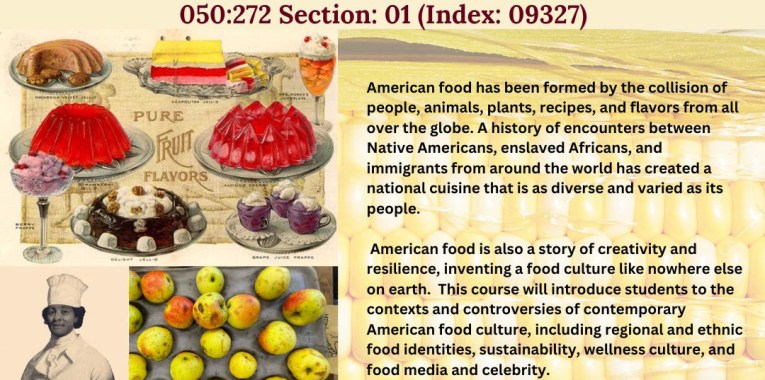
I’m excited to be teaching a new course this semester in the Department of American Studies at Rutgers University New Brunswick: “American Food.”
This course was originally developed by my colleague Dr. Carla Cevasco, but I have revamped it to reflect my areas of expertise and interest. So naturally, orchard and cider content is present. With the help of some of my friends and colleagues, I also added a lot of amazing content and some wonderful guest speakers for this spring semester. This really is a reflection of the breadth of depth of my network in the food and agriculture sectors… and it barely scratches the surface.
I’m also excited to use this opportunity to read some works I haven’t read, and to learn about some things I’m less knowledgeable about. Sometimes teaching a class is the perfect way to set goals for yourself to learn! For example… the Farm Bill. I’ve never read it, and can’t claim to understand it. But with my students, I’m going to dive in.
Since solicitations of ideas from my food and ag network were so key to developing my version of this course, I’d like to share the final syllabus with you here. This google document has comments enabled. If you’d like to add any thoughts, suggest any other readings or speakers, please feel free to do so. While my plans for this semester are set, the future always beckons. Wish me and my students luck this semester!
This query grew out of a very fun interview I did with a Children’s News program called First Stop News. I had a lovely time talking with the team at First Stop News and am delighted to be part of their holiday program. Here is the link to the interview on Youtube: https://www.youtube.com/watch?v=VI8mfuvi43A
However, A viewer commented on my discussion of the date of Christmas, and was unhappy with my comments that the date of Christmas on December 25 is not found in the Bible and may be linked with pagan celebrations of winter solstice. In the interview, I also commented that some people theorize a spring date for the birth of Jesus based on the descriptions shepherds tending their flocks in the Bible. The viewer disputed both these claims: first the viewer addressed the date of Christmas with a theory that a measures of the birth of Christ based on other clues in the Bible, based on the idea that date of John the Baptist’s conception during the feast of Tabernacles. The viewer also addressed the second issue regarding shepherds by pointing out the mild climate of the Middle East, making it feasible for shepherds to be out at this time of year.
The producers of the program asked me to respond, so I wrote them a little essay. I combined my response to them with some other notes I had saved elsewhere, and share the result with you here.As I post this on the last (12th) day of Christmas in 2025, it seemed appropriate to address some quandaries about the date of the first day of Christmas.
Answer
Firstly, I think it is important emphasize that I am a scholar of folklore, and my scholarly interest is in the evolution of the traditions of the festival of Christmas, rather than the theology of Christmas. I rely on my theologian colleagues to debate and present the history of theological arguments for the date of Christmas. There is ample evidence that the festival of Christmas borrows heavily from many non-Christian traditions and sources. Apart from the Christian theological arguments for choosing December 25 as the date of the birth of Christ, the Christmas holiday has most certainly evolved and persisted through many cultural transformations for many reasons in addition to Christianity’s own theological arguments and messages. I am interested in the impact of Christmas as a socially capacious, adaptive, and multicultural festival that draws from many sources. I am not interested in proving or disproving Christian theology. But I am interested in the history of the diverse human cultural interpretations of this holiday.
I’m going to present some thoughts from two other scholars of Christmas. First is Clement Miles, via his book Christmas Customs and Traditions, first published in 1912, republished in 1976. This is one of my favorite sources for Christmas folklore and history, but it does reflect assumptions of a particular era of scholarship that was interested in classical and pre-Christian antecedents of Christian holidays. Secondly, I refer to an eminent contemporary scholar of religion, Andrew McGowan of Yale Divinity School (https://divinity.yale.edu/faculty-and-research/yds-faculty/andrew-mcgowan) who recently published a nice article on the topic of the date of Christmas. McGowan goes into much greater detail about the development of the date of Christmas through the history of Christian theological debate, and I strongly encourage you to read his entire article. I will draw some basic ideas and information from Miles and McGowan to illustrate how this debate has been dealt with by scholars over time. https://www.biblicalarchaeology.org/daily/biblical-topics/new-testament/how-december-25-became-christmas/#note03
Both Miles and McGowan, scholars writing more than 100 years apart, provide much more sophisticated and nuanced histories of the details of the emergence of a date for Christmas in the Christian church than I was able to describe in our interview on First Stop News, but both also acknowledge that the dating of Christmas on December 25 is not attested directly in the Gospels and has been the subject of theological debate since the beginning of the church.
Early Christians argued about determining this date. In the meantime, early Christians first approached the development of a festival around the emergent Christmas holiday with caution about potential overlap with a pagan holiday. As time moved on and Christianity extended across Europe, Christians adopted, used, or simply tolerated the customs and symbols of adjacent pagan holidays to their advantage in promoting their own religious message. It is also worth mentioning that not all Christians today celebrate Christmas on December 25th. Eastern Orthodox churches celebrate Christmas on January 6th, based on the Julian calendar.
According to the historian and folklorist Clement Miles, Christmas takes many of its customs and probably its date on the calendar from the pagan Roman festivals of Saturnalia and Kalends. Saturnalia occurred on December 17th and continued for the week following. We can see in these Roman festivals the seeds of many of the cultural and social aspects of the Christmas holiday. Miles says, “The most remarkable and typical feature however, of the Saturnalia was the mingling of all classes in a common jollity”, which could include feasting and gift giving.”
The Roman festive season continued into the celebration of Kalends, the New Year, when further feasting, spending, gift-giving, parading, and freedom from work prevailed. These customs were so popular and ingrained in Roman life, that early fathers of the Christian church took pains to condemn the practice of these holidays. In a sermon attributed to St. Augustine of Hippo but likely composed in the sixth century, the saint says, “Now as for them who on those days observe any heathen customs, it is to be feared that the name of Christian will avail them nought [….] For he who on the Kalends shows any civility to foolish men who are wantonly sporting, is undoubtedtly a partaker in their sin.” Participating in Kalends celebrations was formally forbidden for Christians by a church council in Constantinople in 692.
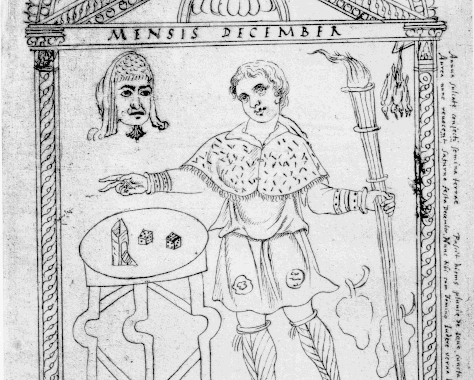
But amidst this rejection of the indulgent aspects of the Roman pagan feasts, Christian observance of the birth of Christ had begun to take root around the same time in the calendar. Clement Miles says, “The first mention of a Nativity feast on December 25th is found in a Roman document known as the Philocalian Calendar, dating from the year 354 […] In 567 the Council of Tours had declared the Twelve Days, from Christmas to Epiphany, a festal tide.” The choice of this date for the celebration of the birth of Christ does not stem from any relationship to the Gospels, as there is no mention of a specific date for Christmas. *This image is of a 17th century manuscript source of the Philcolian Calendar from the Vatican Library(cod. Barberini lat. 2154) which was thought to be copied from a Carolingian copy, Codex Luxemburgensis, a copy of the orginial Roman document.
It is possible that December 25th was chosen to provide an alternative to another pagan celebration on that date the Dies Natalis Solis Invicti, or the birth of the Invincible Sun, a holiday first celebrated by order of Emerpor Aurelian during his reign from 270-275. Christians may have decided to co-opt this pagan celebration of a sun god, occurring near the winter solstice, to highlight their celebration of the birth of their own “light of the world”, Jesus Christ.
In the eyes of Clement Miles and scholars of his era, these Roman Pagan festivals, Saturnalia and Kalends, and Dies Natalis Solis Invicti, provided an antagonism to the morals of Christianity, but also an opportunity for early Christians. By choosing to celebrate their religious holiday in the same part of the year, Miles believed they probably could could appropriate the momentum of festivity, the symbols of light, and the generosity and excitement of popular pagan celebration and offer an alternative religious observance that highlighted the appearance of their new holy figure into a very old Roman world. Miles says:
“What more natural that that the Church should choose this day to celebrate the rising of her Sun of Righteousness with healing in His wings, that she should strive thus to draw away to His workshop some adorers of the god whose symbol and representative was the earthly sun! There is no direct evidence of deliberate substitution, but at all events ecclesiastical writers soon after the foundation of Christmas made good use of the idea that the birthday of the Saviour had replaced the birthday of the sun.” (Clement Miles, Christmas Customs and Traditions. Dover Publications Inc, New York: 1976 pg 23-24).
Miles then refers in a footnote to theories of dating the birth through other scriptural information, referencing another scholar (L Duchesne, “Christian Worship: Its Origin and Evolution” Eng. Trans. Revised Edition. London: 1912). Miles is also nuanced in weaving the cause and effect of these dates together, clearly suggesting influence of Roman paganism on the Christmas festival and the pros and cons early Christians saw in aligning their holiday to this pagan event.
The recent article by McGowan published in Biblical Archaeology provides a very detailed overview of many additional early Christian conversations and debates contributing to the determination of the Christmas holiday and its date. He addresses several theological theories of Jesus’s birth date as calculated in relation to other events in the Bible. Here he discusses one approach that early Christians took in establishing a date for Christmas: “Around 200 C.E. Tertullian of Carthage reported the calculation that the 14th of Nisan (the day of the crucifixion according to the Gospel of John) in the year Jesus diedc was equivalent to March 25 in the Roman (solar) calendar.9 March 25 is, of course, nine months before December 25; it was later recognized as the Feast of the Annunciation—the commemoration of Jesus’ conception.10 Thus, Jesus was believed to have been conceived and crucified on the same day of the year. Exactly nine months later, Jesus was born, on December 25.”
But McGowan also addresses the theory of overlap and influence with other pagan solar festivals like Saturnalia, as Miles did over a century ago. McGowan is more critical of the attributions of influence by Roman pagan sources, and he favors sourcing the date from some of these internal Christian theological theories. But he does not rule out the influence of pagan festivals on the development of the holiday, as he says here:
“In the end we are left with a question: How did December 25 become Christmas? We cannot be entirely sure. Elements of the festival that developed from the fourth century until modern times may well derive from pagan traditions. Yet the actual date might really derive more from Judaism—from Jesus’ death at Passover, and from the rabbinic notion that great things might be expected, again and again, at the same time of the year—than from paganism. Then again, in this notion of cycles and the return of God’s redemption, we may perhaps also be touching upon something that the pagan Romans who celebrated Sol Invictus, and many other peoples since, would have understood and claimed for their own, too.”
Clearly, these debates have been going on for a long time!
Lastly, As for the shepherds watching their flocks by night – this is a theory often mentioned by people who favored a spring date, but the differences in climate do make the reference to shepherds as a marker of time of year unreliable. Even McGowan mentions this in his article: “The biblical reference to shepherds tending their flocks at night when they hear the news of Jesus’ birth (Luke 2:8) might suggest the spring lambing season; in the cold month of December, on the other hand, sheep might well have been corralled. Yet most scholars would urge caution about extracting such a precise but incidental detail from a narrative whose focus is theological rather than calendrical.”
I wanted to mention the shepherd-spring date-theory as something people discussed in debates of the date. While the activities of the shepherds can’t tell us as much as we’d like, it certainly is interesting to think about the agricultural cycles that both the characters near Bethlehem may have been engaging in during the first century AD, as well as the agricultural cycles that Christians interpreted from the story based on their own lived experiences in far flung places around the world.
I’m working on a story about the origin of the Christmas spider. I was wondering if you might be able to answer a few questions to be quoted as an expert source in this story given your background in folklore. I have a few quick questions below — any insight is much appreciated!
Why do people hang spiders on their Christmas trees?
What are some of the legends of the Christmas spider?
How is the Christmas spider related to tinsel?
Are there any other Christmas ornaments/decor/objects that are said to bring good luck?
Answer
The Christmas Spider? This was another query I was surprised by, and a tradition I had never heard of. But the answer was closer at hand than I imagined. A quick search keyed me into the fact that this was an eastern European tradition, with particular popularity in Western Ukraine (see this very helpful wikipedia page for an overview and citations). Then all I had to do was query some of my Ukrainian American friends from the choir I sing with Ukrainian Village Voices, and the details started to emerge. Thank you to all my Ukrainian friends who provided many of the resources below.
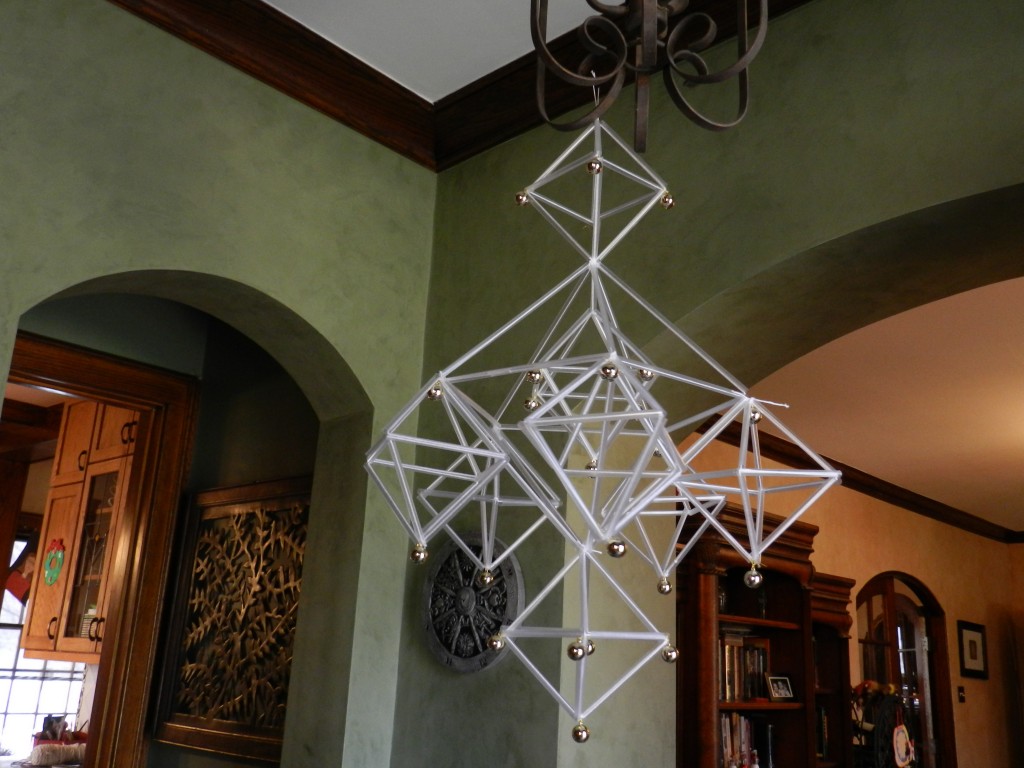
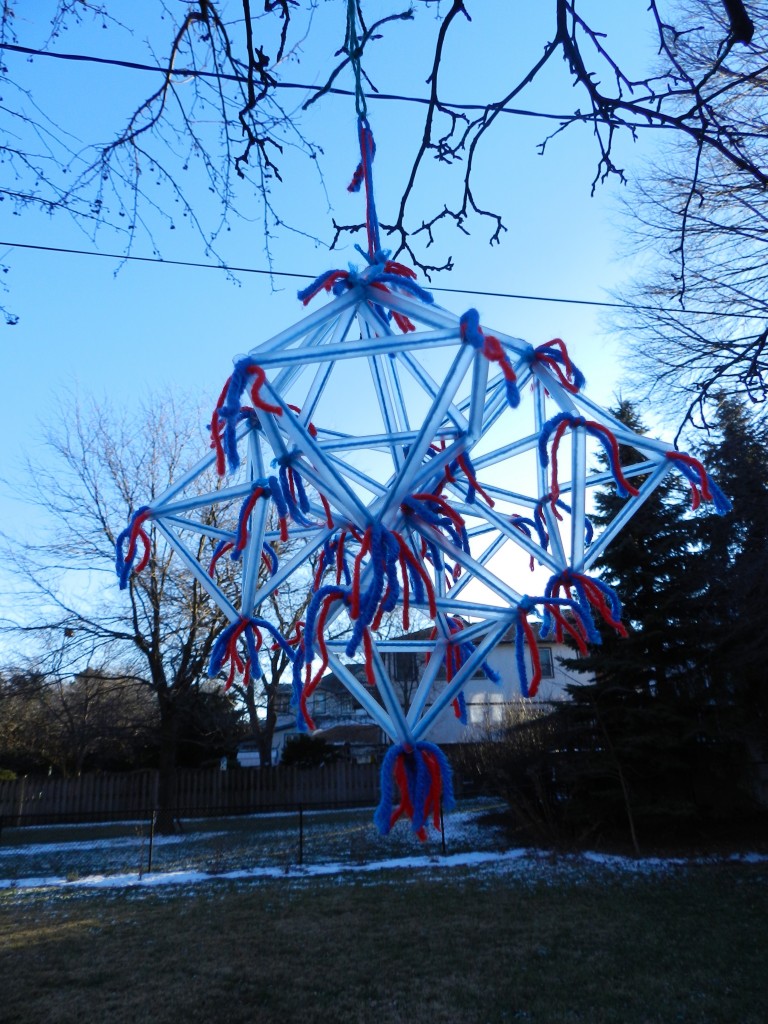
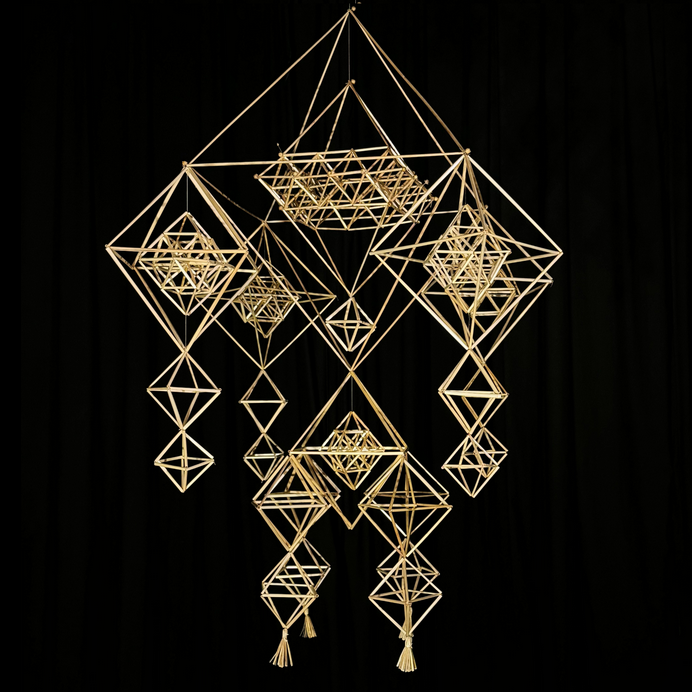
The Ukrainian pavuchky, or spider, is a traditional Christmas decoration and accompanying tale. In some of the stories, the Christmas spider visits a house on Christmas eve and decorates the family’s Christmas tree with cobwebs, which shine like the sun on Christmas morning. The spider is a helper and protector of the house and family. In various retellings, the wife is decorating for Christmas under difficult circumstances, including poverty or the absence of the husband due to war. And sometimes it is Santa, the Christ Child, or St. Nicholas who visit and bless the work of the spiders. Decorations related to this story involved making spiders and cobwebs to decorate the tree, and it is sometimes used to explain the decoration of trees with tinsel. However, an older decorative tradition involves the creation of elaborate straw ornaments that hang from the ceiling like a chandelier, a beautiful abstraction of the spider’s web using the material – straw – that forms many other decorative and ritual purposes in the Ukrainian home and is a symbol of a country renowned for its agricultural heritage as the breadbasket of Europe.
Personal Anecdotes: Here are some of the personal responses I received about this tradition:
“You will find Christmas stories pertaining to spiders “decorating” the tree with their web. Definitely a story I had heard growing up. Spiders were distant “friends” in my family!” ~ Lilia Pavlovsky
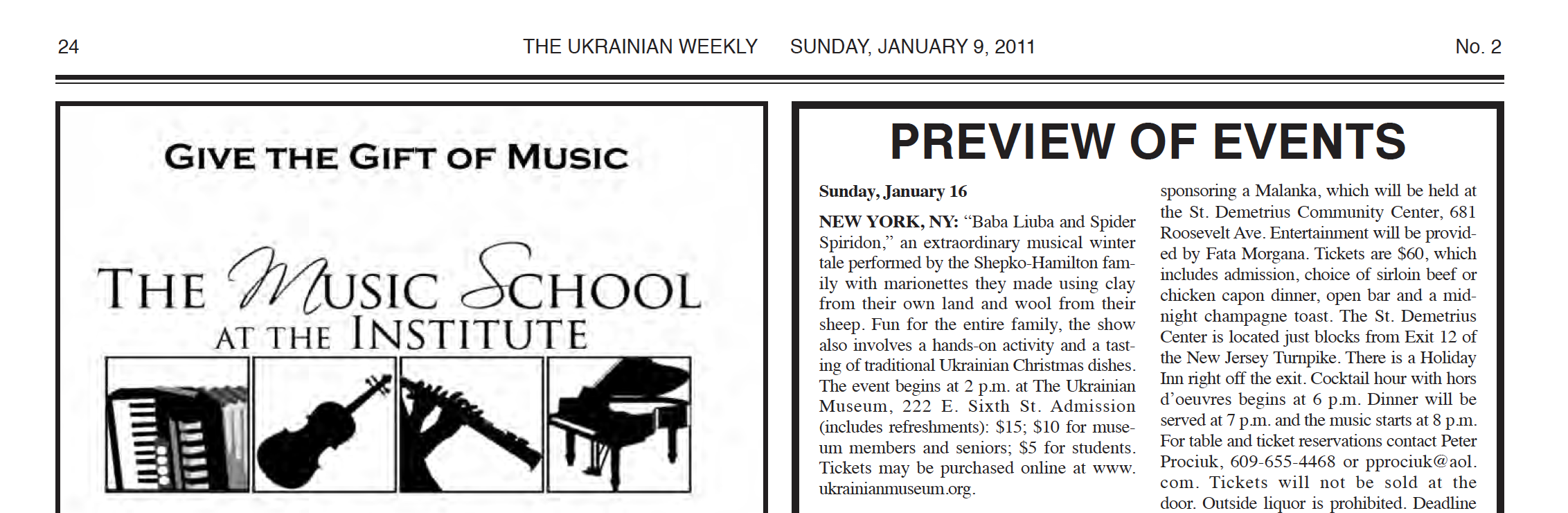
“Ooh I love this tradition. My mom had us perform a puppet show that had the spider involved growing up” ~ ZoyaShepko (See the adjacent write-up in the Ukrainian Weekly as evidence!)
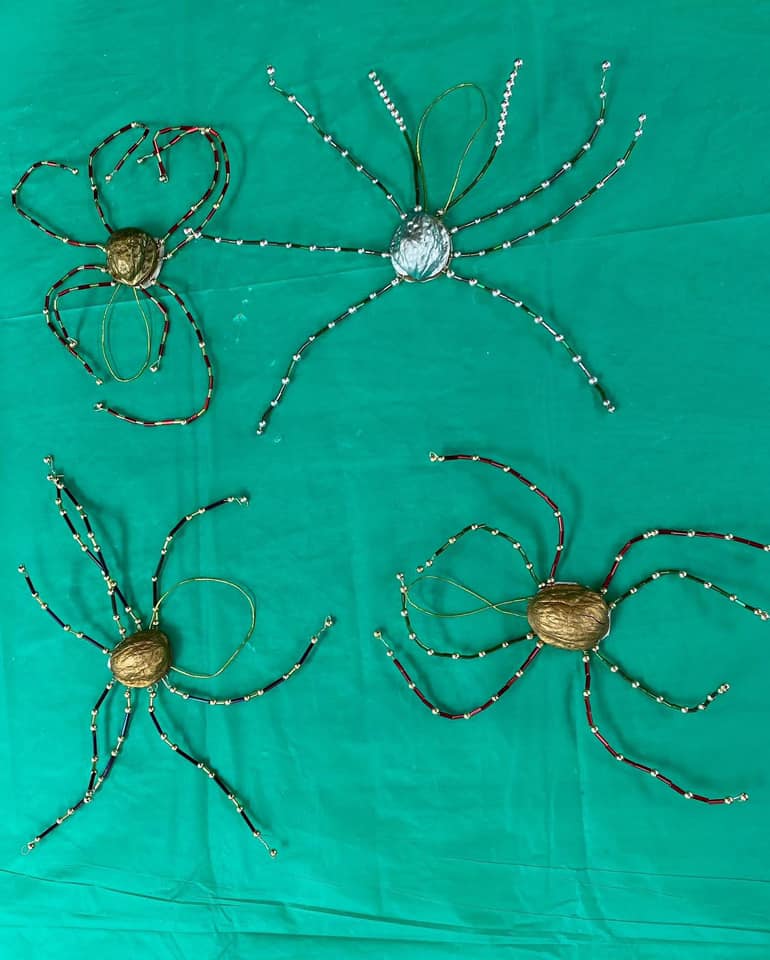
“My family still puts some old school handmade pavuchky on our tree – walnut shells with wire and bead legs all spray painted gold and silver lol, but I don’t remember learning any of their lore growing up” ~LarissaSzyszka
“For years I led workshops at the Ukrainian Museum on how to make the traditional spiders and we had a story to go along with it […] By the way this workshop is still run every year.” ~LaryssaCzebiniak (image provided by Laryssa)
“So from what I know- each different shape in the spider symbolizes something- the place where it came from, geographical markers and objects. My Ukrainian teacher told me (and I didn’t know this) that the spider is a protector- because Ukrainians believe that there were spiders at the crucifixion of Jesus- and that they stationed themselves near Jesus’ wounds- so they would look like nails- and it stopped the Romans from putting more nails into his flesh.” – KatiePawluk
Publications of the Legend of the Christmas Spider
There are many versions of this story. I have included a few of note here, which were published by Ukrainian or Ukrainian American authors:
A fairly recent publication brought this story to a wider audience. The Spider’s Gift: A Ukrainian Christmas Story by Eric A Kimmel, illustrated by Katya Krenina, was published in 2010.
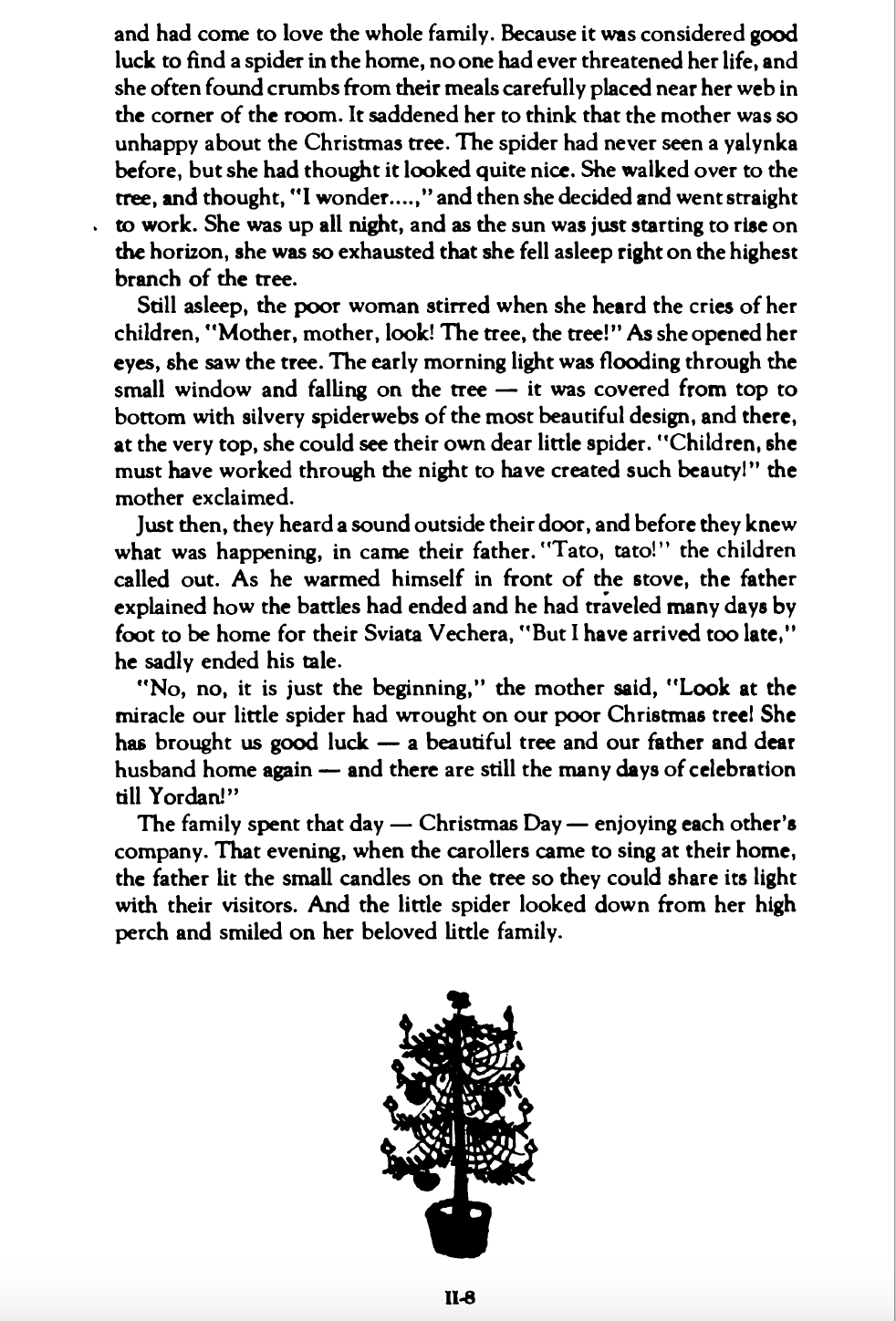
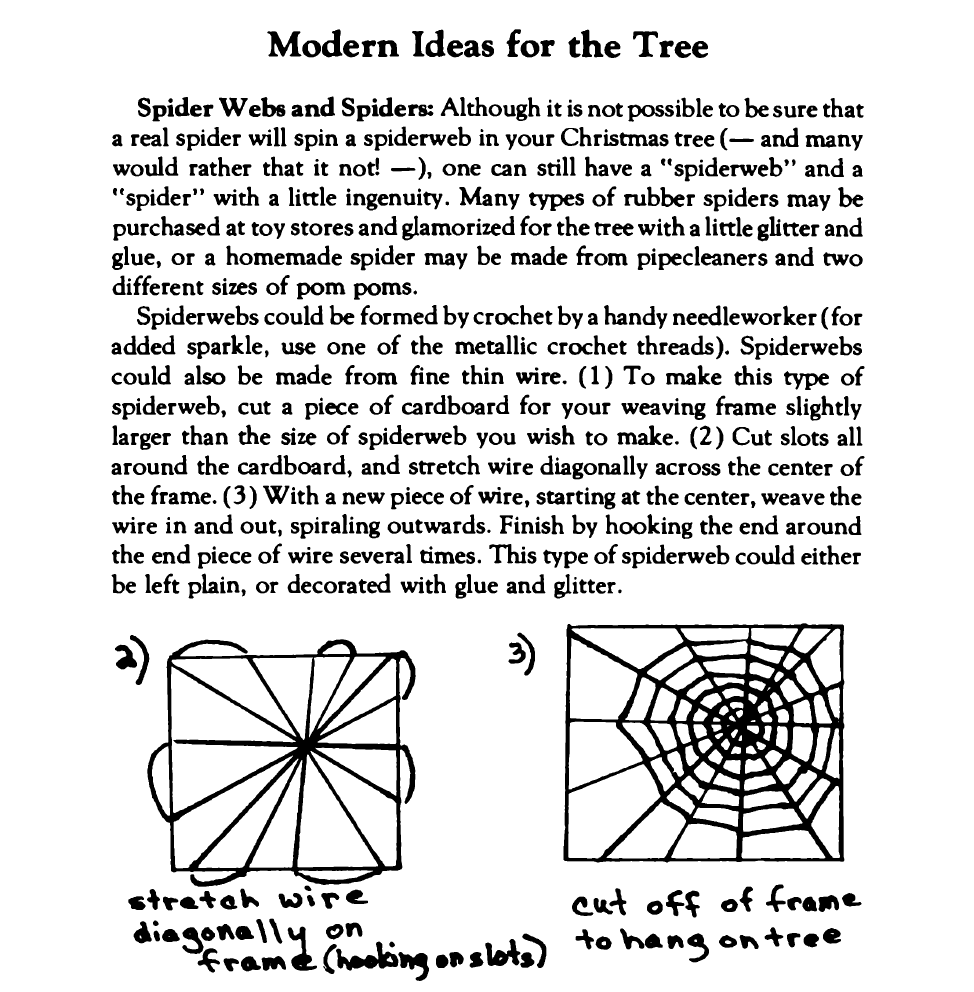
There have been many earlier publications of the legend. A fascinating compendium of Ukrainian diaspora traditions, Ukrainian Christmas: Traditions, Folk Customs, and Recipes by Mary Ann Woloch Vaughn was part of the Ukrainian Culinary Heritage Project: Seeds and Roots, published by Communications Printing in Coralville, Iowa in 1982 and is available online at the specific link above, which is part of https://diasporiana.org.ua an online library of Ukrainian materials. This publication includes a retelling of the story itself and some instructions for making Christmas tree decorations, which I have screenshot below:
A children’s book Silver Threads published in 1994 by Marsha Forchuk Skrypuch and illustrated by Michael Martchenko retells this story of a benevolent spider assisting a distraught wife who longs for her husband’s return from war in the context of the Canadian Ukrainian diaspora and World War 1.
Another children’s book reinterpreting the legend , The Golden Spider, was published in Ukraine in 2009 by Ivan Malovych, illustrated by Kateryna Shtanko. This was published by A-BA-BA-HA-LA-MA-HA, which describes itself as “Ukraine’s finest children’s book publisher and one of the most esteemed producers of children’s literature in Central and Eastern Europe. The first privately owned children’s publishing house to be established in an independent Ukraine.”
Somewhat separately from the story of spiders decorating the Christmas tree, which seems to be a more recent phenomenon, is an ornament also called a “Pavuk” or “spider” that hangs from the ceiling and is meant to bring good luck and protection. According to the St. Volodymr Institute’s website, “A pavuk, meaning “spider” in Ukrainian, is a traditional geometric mobile with deep cultural roots. These handcrafted talismans are traditionally believed to trap negative energy and bring blessings and protection to households. Their web-like forms, made from harvest straw, reflect the interconnectedness of community and the cycles of life.” The Institute is hosting an exhibition”Pavuky for 100 Days” in 2024 commemorating 1000 days of occupation since the beginning of the war with Russia: https://www.stvolodymyr.org/news/pavuky-for-1000-days
The pavuk exists alongside other very traditional Ukrainian ornaments made of straw, especially the “Didukh“, or “forefather”, a sheaf of grain which commemorated the family ancestors and was carried into the house and placed in a space of honor near other icons during the holiday season.
“The Pavuk (“spider”) is a mobile that would also be crafted from straw. It would be hung in the home for the winter season. Out of the chaos of these random pieces of straw , they would cut and craft diamond shapes strung together to make a delicate hanging mobile. Some say the name comes from patterns like a spiderweb, others saw that the hanging mobiles themselves are like giant spiders. Either way, it’s a wonderful name and tradition, since spiders are cherished in Ukrainian culture as messengers, harbingers of good fortune. The pavuk would absorb the negative energies and then get burned on the Feast of the Epiphany. Some believed that they should be left hanging in the home to attract good luck for the family. Some moved it to the barn to bring fortune and health for the animals. Either way, the pavuk reminded the family of the bounty of the harvest through the cold winter days.” – Valya Dudycz Lupescu from her blog post “Spiders and Straw” (Left and middle images above from this website. Right image from St. Volodymyr Institute “Pavuky for 1000 Days exhibit”)
This Youtube video features a two hour workshop offered by the St. Vladimir Institute in Toronto “Design your Pavuk – Straw Spider Mobile Workshop” with Božena Hrycyna: https://www.youtube.com/watch?v=14XUDXuNGW4
While researching this post I came across two editions of the Ukrainian Weekly that were chock full of articles about Ukrainian Christmas happenings. I include the PDFs here for your information
It’s that time of year, where I respond to media and friend requests for information on Christmas customs.
Query:
Would it be possible to provide even a few lines of commentary on these mushrooms, specifically (separately from anything Santa-related)? As in, how/why did decorating for Christmas with these red and white mushrooms become a tradition in the U.S.?
Answer:
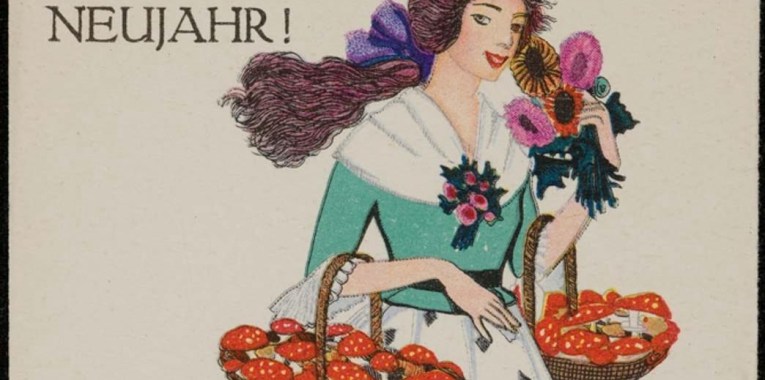
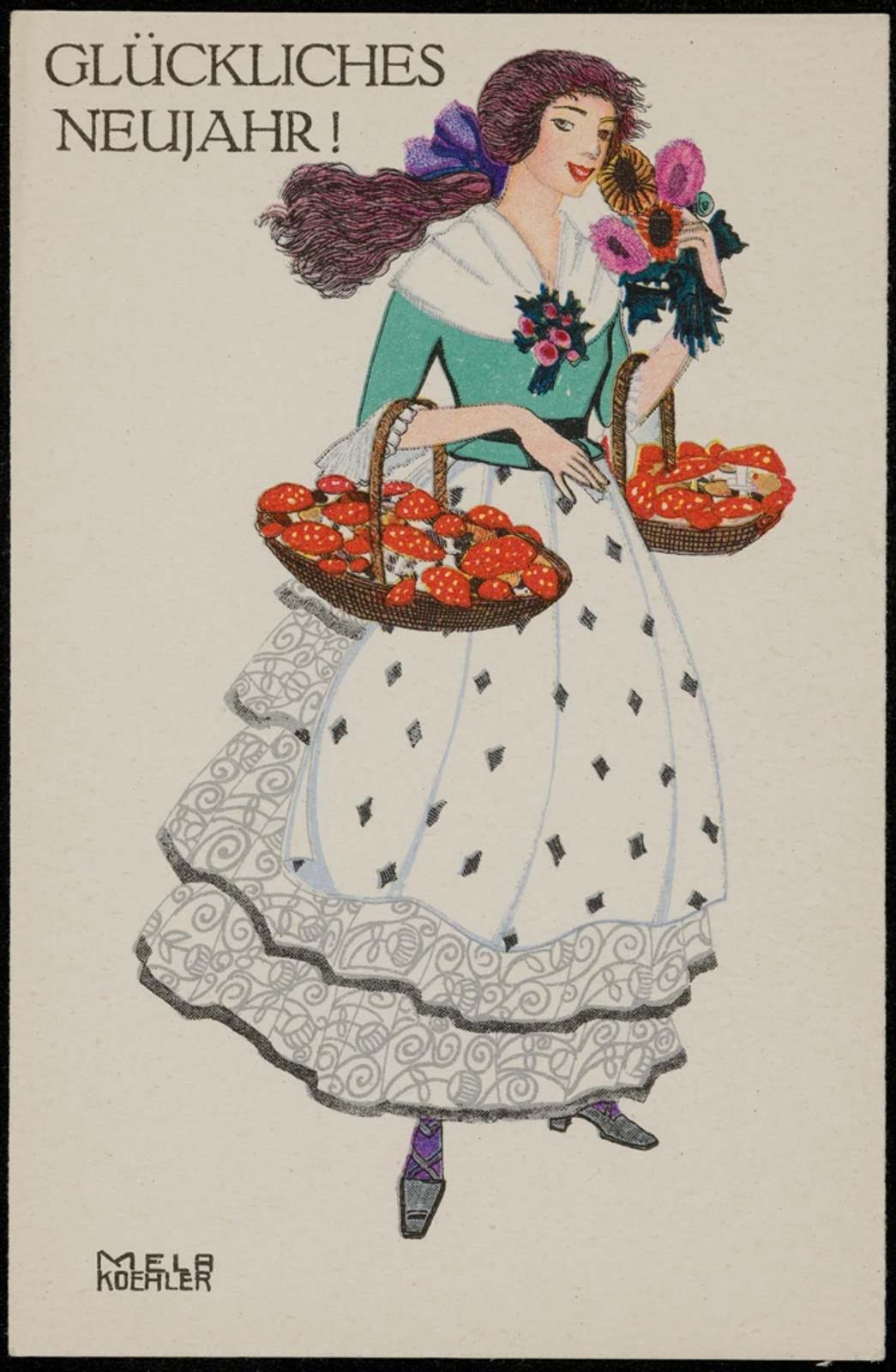
With just an evening to devote to this query, I decided to do some quick and dirty research and a little bit of theorizing. In short, I think it would be an interesting question to look into the history of design and illustration to find when and where mushrooms become part of the visual lexicon of Christmas in America. If anyone out there has further thoughts or sources, please send. Below are are three threads of thought on Mushrooms and Christmas I wanted to mention. The image above left is “Happy New Year” postcard from the Boston Museum of Fine Art Leonard A. Lauder Postcard Archive—Gift of Leonard A. Lauder. It is by Mela Koehler, Vienna, Austria, about 1910. See below for the German mushroom good luck custom!(https://collections.mfa.org/download/555796;jsessionid=1CDA61E3A483B2C6D9A8462A6D7CD46C)
1) The Psychedelic Mushroom Santa Story. These days, if one googles “Christmas Mushrooms” one is likely to get a raft of media articles about fly agric, shamans, Sami, and Santa. While fanciful and sometimes intriguing, these associations are are more speculative than strictly historical. One of these articles inspired my blog post on the history of Santa last year. A fantastic response to the psychedelic mushroom Santa story is available in an article in National Geographic that interviewed my folklorist colleague Tim Frandy on this topic. He addresses the potential use of the mushroom amanita mascara, also known as fly agric, by Sámi shamans, and whether this played a role in shaping the myth of Santa. Frandy says:
“While it’s possible, even likely, that Sámi people formerly used amanita, it’s unlikely that this had any meaningful impact on Christmas lore in Europe,” says Frandy. The only time Frandy has seen Sámi shaman in particular connected to amanita was when a Finnish ethnographer claimed in the 1940s that Inari Sámi noaiddit used to consume amanita with seven spots. “Growing up Finnish, Swedish, and Sámi, I’ve never heard of any mushroom associations with Christmas … until Ikea started selling mushroom decorations for Christmas trees,” Frandy muses. “In Sápmi, those mushrooms emerge in September, and by December are long gone under snow.” (https://www.nationalgeographic.com/environment/article/santa-claus-magic-mushroom-legend)
2. Fairy Tales and Mushrooms. A better approach to understanding Christmas mushrooms might lie in looking at the ongoing relationship of fairies and elves to mushrooms in lore, literature, and illustration. We see mentions of toadstools, Puck, and fairies all the way back in Shakespeare’s A Midsummer Night’s Dream. Fairy Tales in the 19th century were often illustrated with mushrooms, toadstools, and whimsical but detailed botanical drawings. It would be a worthwhile venture to investigate the depiction of mushrooms in art and illustration during this period, and draw links between the general approach to illustrating fairy tales and the specific application of that style to the magical interpretations of Christmas as a genre of fairy stories. The article below has a very interesting take on this relationship, drawing a connection to the development of scientific and fantastical imagery in illustration:
Yet, like the microscope, the fairy offered Victorians a means of imaginatively reconceptualizing the natural world as a place of minute wonders; the microscope revealed real, living particles in the crevices of nature, while fairy texts imagined mushrooms and flower buds populated with miniature fairies. (Forsberg, Laura. “Nature’s Invisibilia: The Victorian Microscope and the Miniature Fairy.” Victorian Studies 57, no. 4 (2015): 638–66. https://doi.org/10.2979/victorianstudies.57.4.03.)
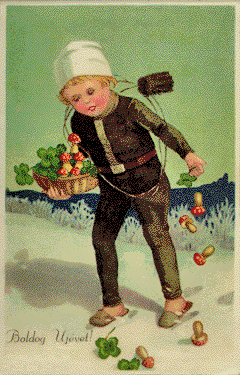
3) German and Austrian Good Luck Charms, Sylvester / New Years, and Chimney Sweeps. Several internet posts I found referenced the fact that the mushroom is a symbol of good luck in German speaking cultures of Central Europe. Several noted a particular relationship between the depiction of Fly Agric and chimney sweeps on cards traded during the New Year, also celebrated as Sylvester. The quotations below note this historical development of a mushrooms as a good luck custom and their subsequent incorporation into a visual motif on holiday cards in Germany. The transition of this folk belief of mushrooms as good luck into a custom of depicting mushrooms on holiday cards would be a fascinating topic to explore further. As Christmas / New Years cards grew in popularity, became commercialized, and crossed cultural boundaries, did this good luck mushroom imagery migrate from Germany and come into use in America? And did it become part of a growing design motif integrated into contemporary Christmas images? I’d love to know more! Two of the quotes below are from websites which give no scholarly or historical attribution, and I have not had time to follow up on scholarly sources for this custom, but I think it is an interesting direction to follow up with more research. Does anyone out there have good historical sources to share on this topic?
“Whatever the case may be, the stunning and seductive be Amanita muscaria has inspired various people in different ways. It is a favorite among illustrators, and its image is repeatedly found in fairy- tale books as an archetype for all mushrooms. In Germany and Austria it came to be considered a good luck omen and from there was adopted as the mascot of chimneysweeps throughout Europe.” (Whelan, Christal. “‘Amanita Muscaria’: The Gorgeous Mushroom.” Asian Folklore Studies 53, no. 1 (1994): 163–67. https://doi.org/10.2307/1178564.)
“The appearance of the Chimney Sweep (in German, Schornsteinfeger) on the New Year is thought bring good fortune, and this ordinarily lowly figure is met with reverence and good cheer. Folk images of the Chimney Sweep often depict him spilling forth woth tokens of good luck, including the familiar four-leafed clover and the more regional “red fly” mushroom. The Chimney Sweep bearing gifts begs comparison to another seasonal fireplace visitor, Santa Claus (from the Dutch Sinterklaas, or “Klaus of the cinders”), thought by some mythologists to be in part derived from the Norse God Thor, whose traditional altar is the home hearth. The distinctive red-and-white coloring of the “red fly” mushroom (amanita muscaria) carried by the Chimney Sweep, seems to further reinforce these connections.” (https://www.superiorconcept.org/Firstnight/germany.htm)
“The imagery on this card is unusual to American eyes because the slipshod young chimney sweep is not only sprinkling the ground with four-leaf clovers, he is equally generous in his distribution of toxic red and white Amanita muscaria mushrooms. This is not as strange as it seems, however, for while the four-leaf clover is considered lucky throughout Europe and North America, the Amanita muscaria or “gluckpilz” (“lucky mushroom” in German) is deemed fortuitous in Central and Eastern Europe, where there are remnants of respect for its ancient use as a shamanic hallucinogen.” (https://www.luckymojo.com/chimneysweep.html)
I was recently asked by a colleague to offer some advice to a potential grad student seeking programs where they could study at the intersection of plant science and social science. The student in question was specifically interested in an academic teaching/research career. I would have additional/different kinds of advice for someone interested in careers beyond the academy. My response seemed worth archiving and sharing. I’ve revised it a bit to offer some additional advice I’ve given to other students over the years. My links are a bit random and definitely incomplete – what I could think of at the moment. Suggestions, corrections, and comments are welcome.
Hello Student!
One of the things I’d encourage you to think about is – especially if you want to teach in higher ed – what discipline do you want to be your primary home? That question will determine so much of your professional life. Innovative trans-disciplinary programs that truly integrate social science and plant science disciplinary orientations are rare, very interesting, and worth looking at. However, you must ask yourself a basic question, do you want your core scholarly identity to be in the social sciences or the plant sciences? Generally you have to pick one, as even trans-disciplinary programs and departments will be more of a collaboration between scholars in those disciplines, rather than a true melding of them. It is very hard to do both, unless you do them sequentially. In general, I have known some people who become qualified in a science discipline and then pursued a social science later: MDs who become anthropologists, for example. I think it would be much harder to do it the other way around. Grounding yourself in a chosen discipline does, however, open the way towards collaborating effectively with others around shared topics of interest.
So a very important question to ask at this stage, is: how much are you married to a specific discipline, methodology, or topic? Knowing what you are into may be hard to know as an undergrad, but the more you can dwell on that question, the more insight you will have as to a good fit for graduate school, and even more, in the long haul of your career.
If you want to work at the boundary of social science / plant sciences, from a primarily social science position, there are a number of social science disciplines and programs that could work, but the boundaries, opportunities, and limitations are more or less distinct according to discipline, and this can affect your ability to find academic employment later in your career. For example:
Anthropology tends to be very insular but also widely applicable. In other words, you could get an anthro degree and be accepted in a wide range of social science or humanities departments, because it is the core ethnographic method discipline. But you will never be employed in an anthro department if you are not specifically trained as an anthropologist. Though I am very familiar with anthro scholarship, I do not think I would ever be employed in an anthro department, as I did not study or obtain a degree in an anthro department. My colleagues who aimed to be employed in anthro departments all got anthro PhDs or joint PhDs with anthro. Anthropology is often highly oriented to its own methodology, especially in its teaching functions, whereas other departments or disciplines may be more oriented towards topic and less towards methodology. Anthropology has long had a focus on human relationships to natural resources. I would look for programs that have specialties in Ethnobotony, Environmental Anthropology or Anthropology of Food. There are a bunch. Easy to find via search. Here are some links:
Geography is a very open discipline, at least in the social/cultural/human branches. I mix with cultural geographers a lot, attend their conferences, and have fruitful collaborations with them. They are very welcoming to many disciplines, as long as the orientation is to study of place or environment. They are kind of in the inverse of anthro: more oriented to topic, more flexible on methodology.
Sociology is especially open to applied and policy work but usually requires quantitative training. There is an area of this discipline known as rural sociology that often deals with agricultural issues. I find it fascinating, but has waned in intellectual notice in recent years. It tends to still live at land grant universities and be more oriented to economic or demographic questions.
Interdisciplinary or niche departments (like American Studies, Folklore and Ethnomusicology, Gender Studies, Food Studies, Science and Technology Studies etc…) tend to be a total wild cards. It really depends who your advisor is and what their specific disciplinary orientation is. Getting a PhD in such a department means committing to a career of being entrepreneurial, self-starting, and adaptable. You will always need to make the case for how you fit into a more traditional discipline. But you are also more empowered to adapt to varied opportunities than people with more traditional or rigid disciplinary homes. Your minor or secondary area of study will be very important if you take this route, so that you can strategize your appeal to a variety of teaching or research homes. This has been my personal experience. Here is an initiative from my home discipline, Folklore and Ethnomusicology:
Landscape Architecture is professional field oriented to training and licensing practitioners. If you want to work outside of an academic space in a field dedicated to making tangible, practical change in human behavior in relationship to plants, and you are interested in art, design, or engineering, this may be a field to explore.
“This conference, organised collaboratively between Royal Botanic Gardens, Kew and the Linnean Society of London, looks back at the place of trees in global culture (trees in popular literature and arts): why do they hold such a special place in our culture? How has this been expressed through words and paintings? It will also look at how our gaze upon trees has transformed, with the realisation that trees are instrumental to our sense of belonging, well-being and happiness, and will look at the influence of other societies that have looked at and looked after trees in different ways.”
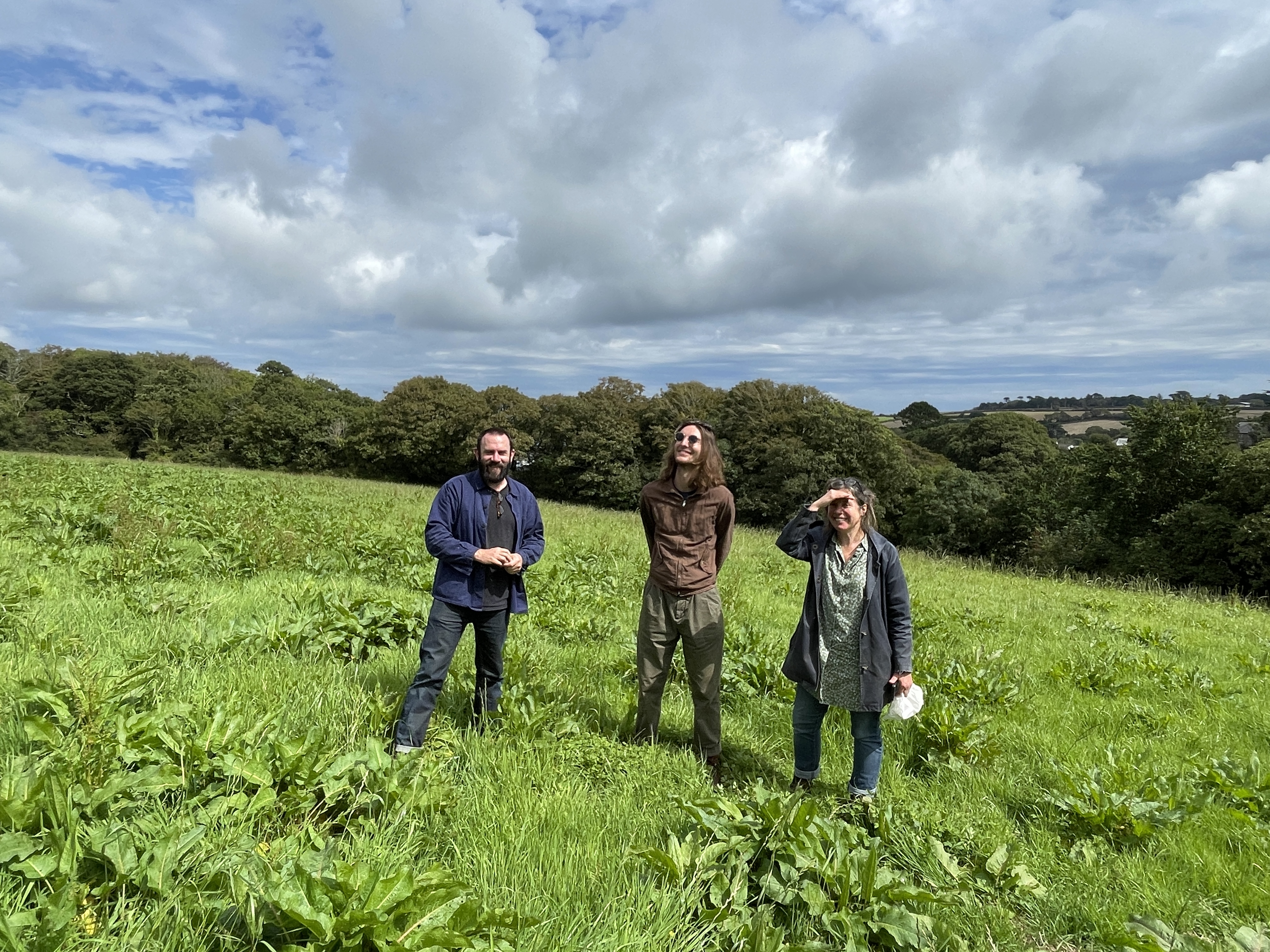
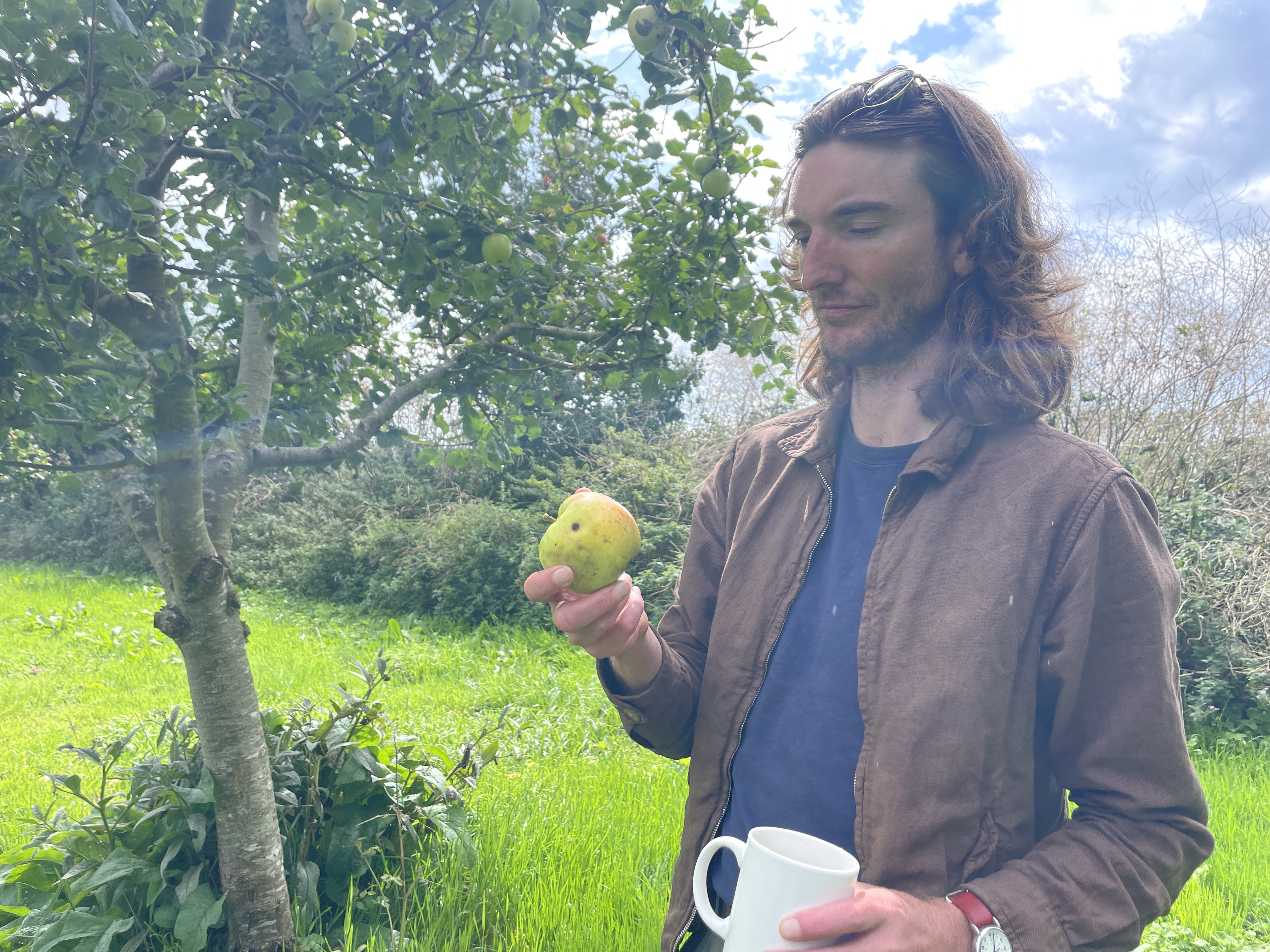
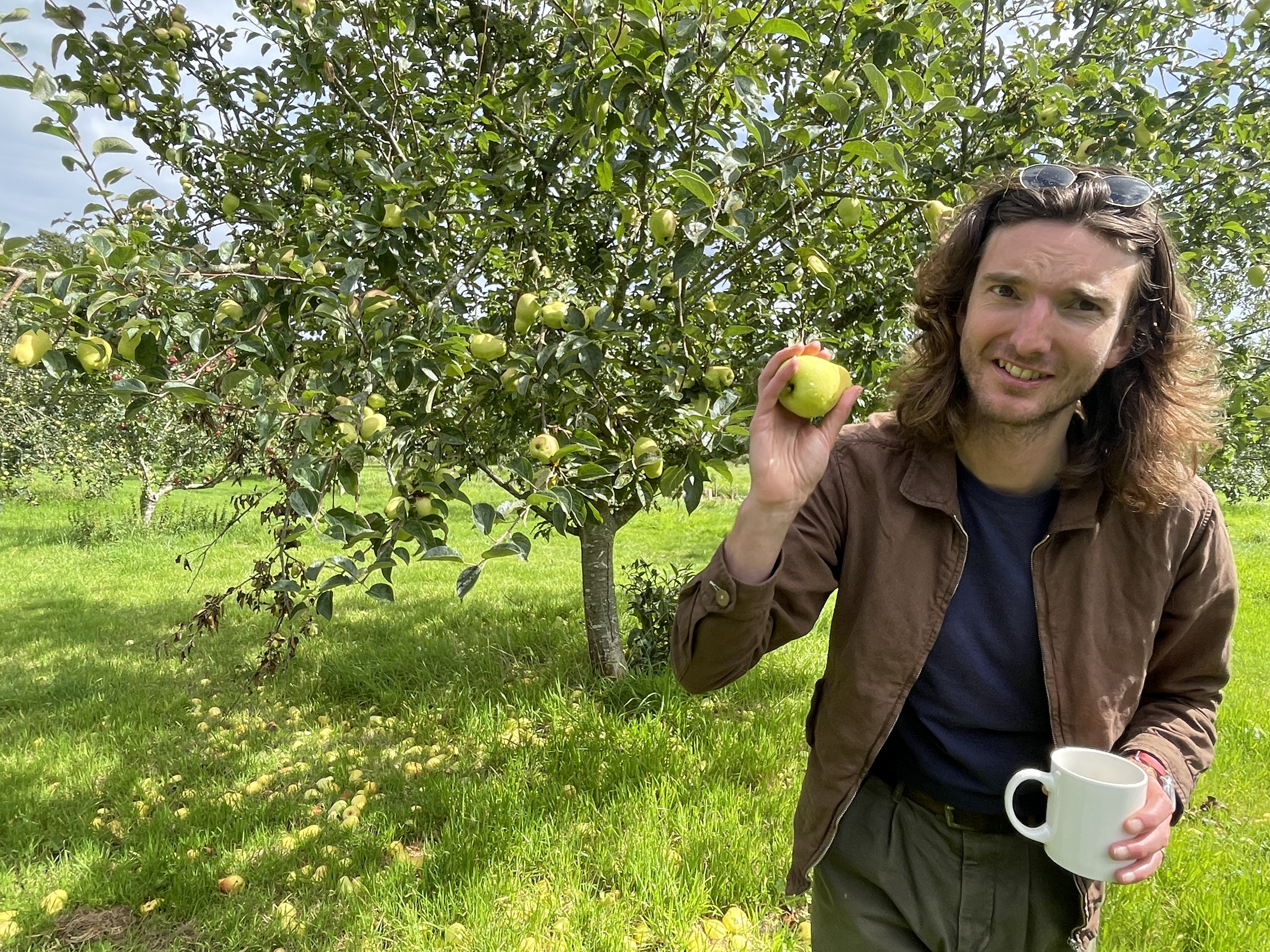
Each opportunity to take the project on the road yields new opportunities to connect with others and expand the ideas that inform our research. This summer at the Royal Geographical Society, I was lucky to connect with William Lawrence Arnold, James Fergusson, and Caitlin DeSilvey on their Some Interesting Apples project in Cornwall, which is applying some of the same interests in wild seedling fruit that we are exploring in America in their southwestern corner of the UK. Here are some photos from our connections in Cornwall!
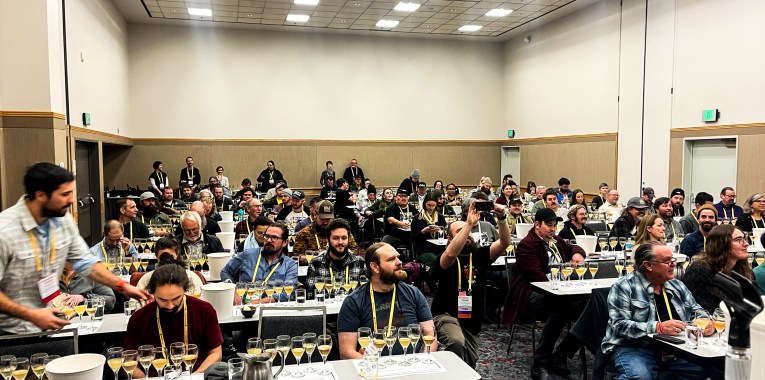
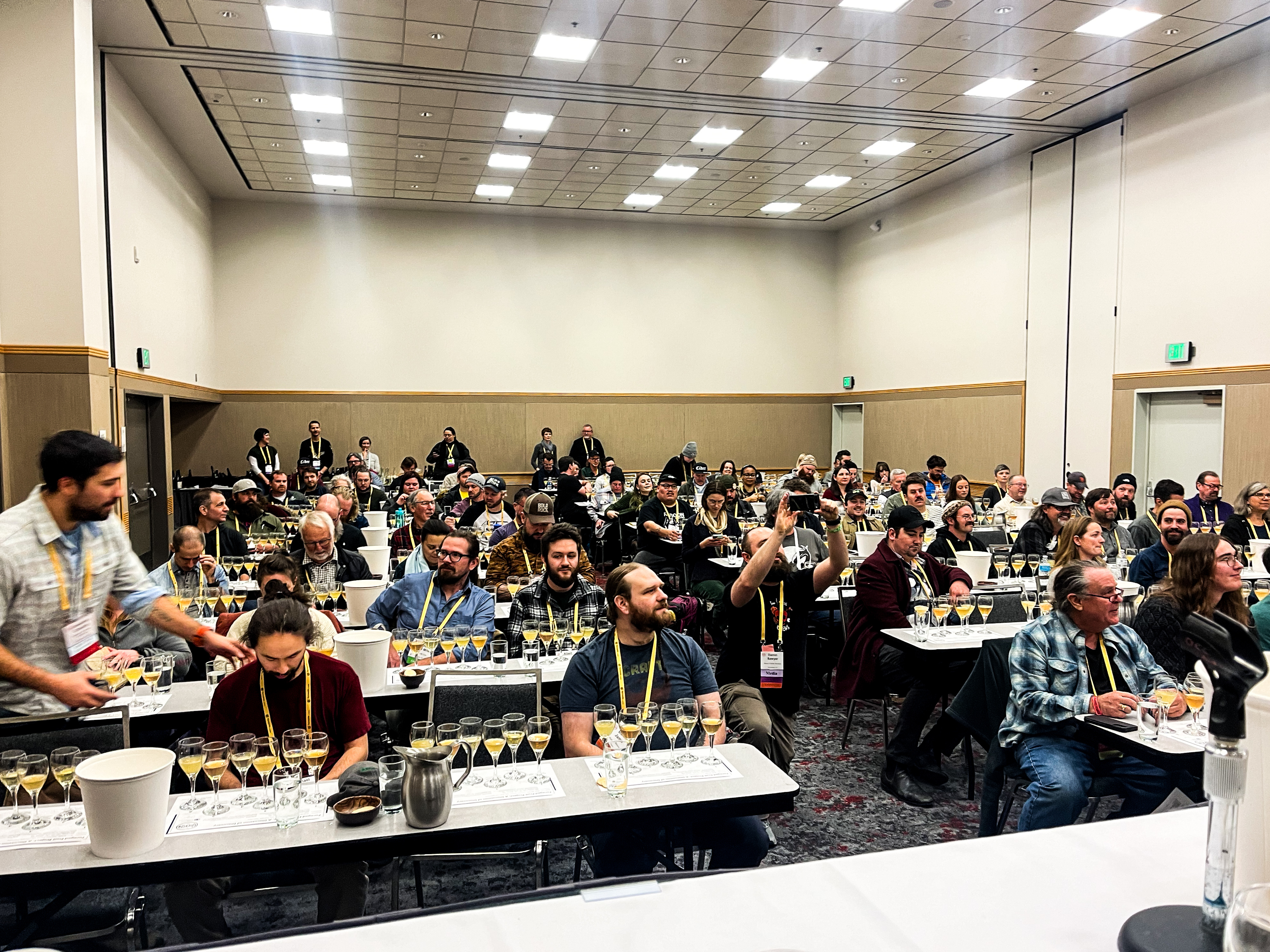
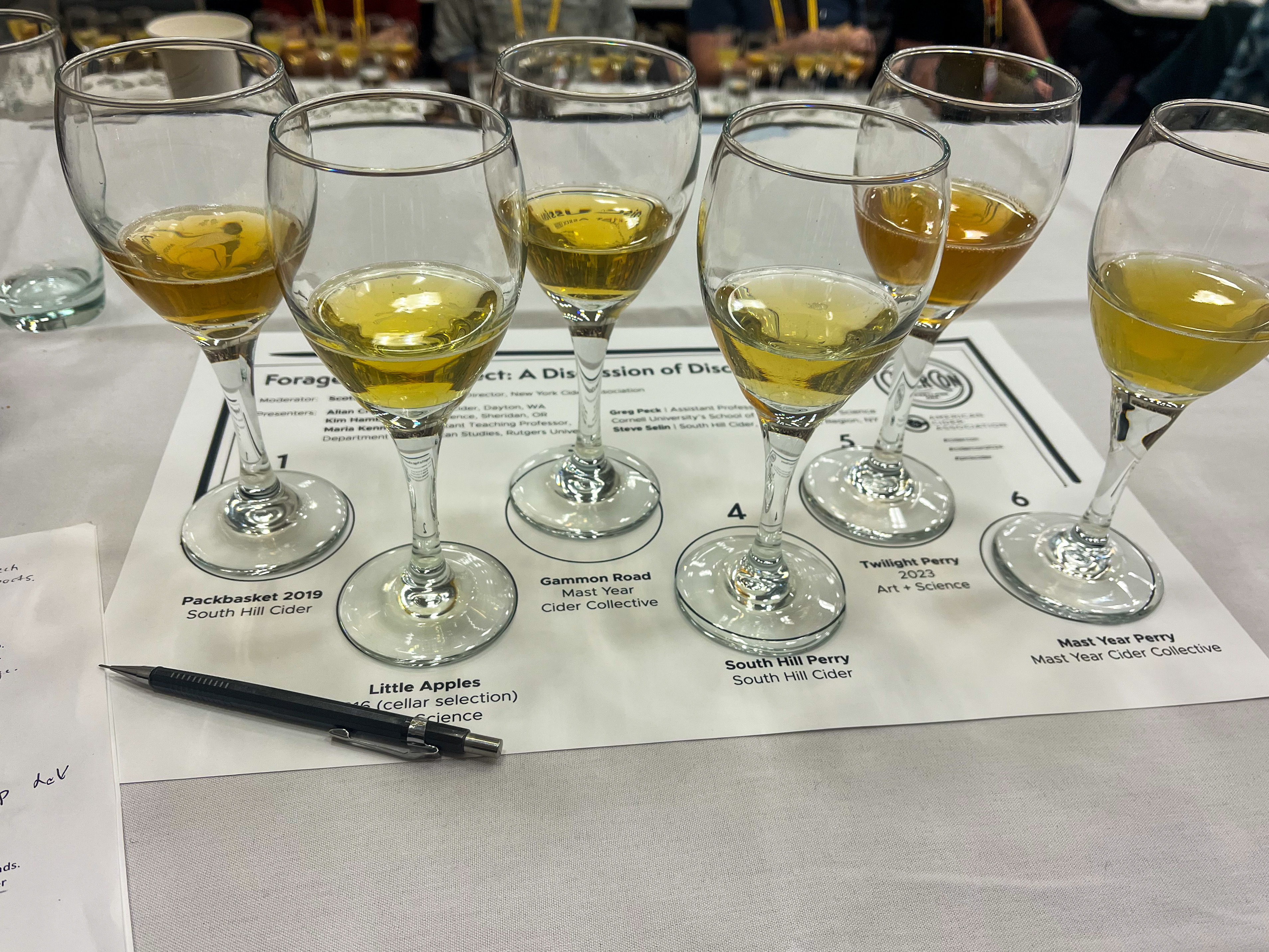
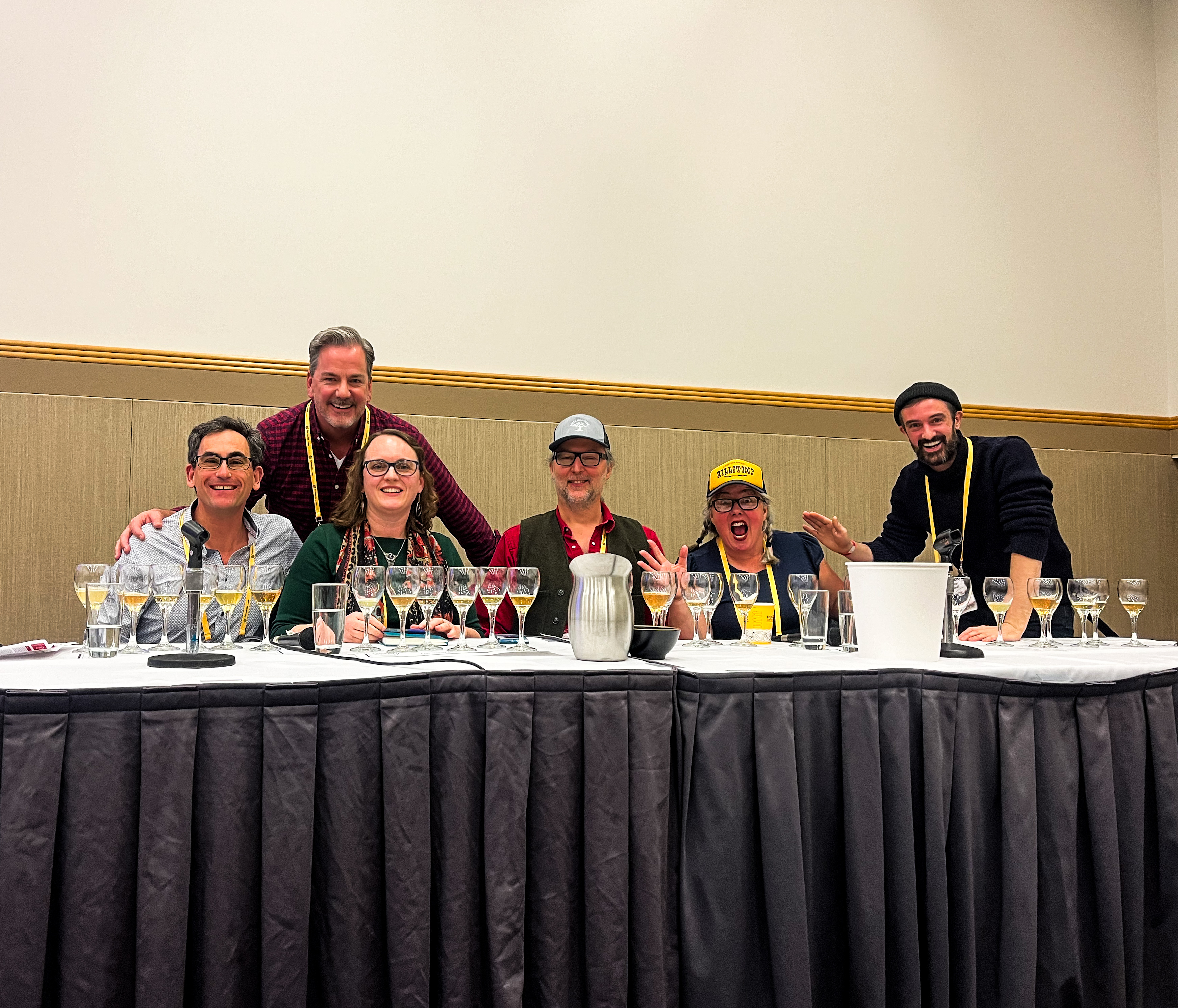
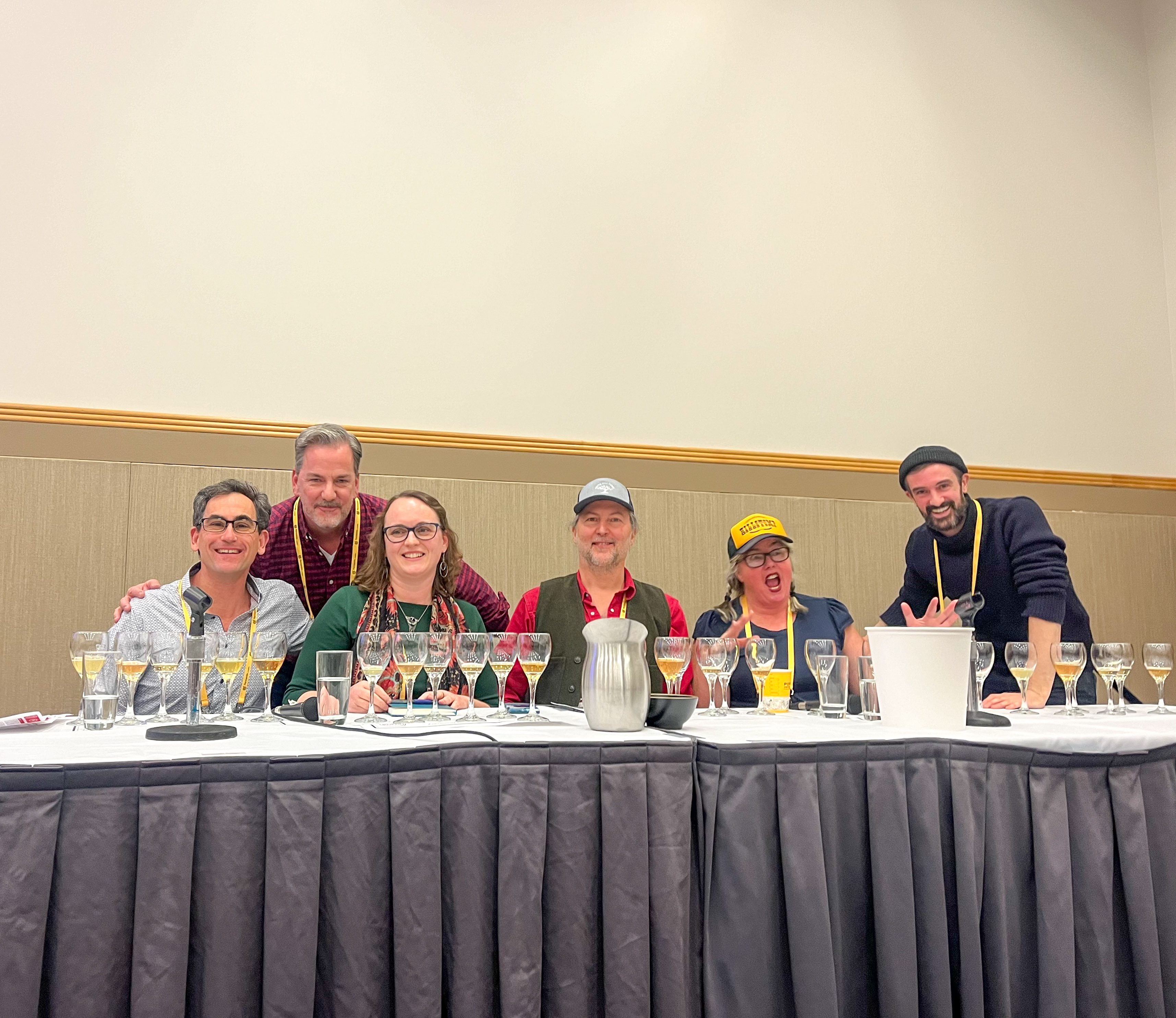
At Cider Con, we had the amazing opportunity to connect our foraged fruit project research in New York with the work of foragers out in the Pacific Northwest through our conversations with Kim Hamblin of Art+Science Cider and Wine and Sager Small of Mast Year Cider Collective. I’m looking forward to what this next trip and meeting of minds will bring.







 Cider With Maria